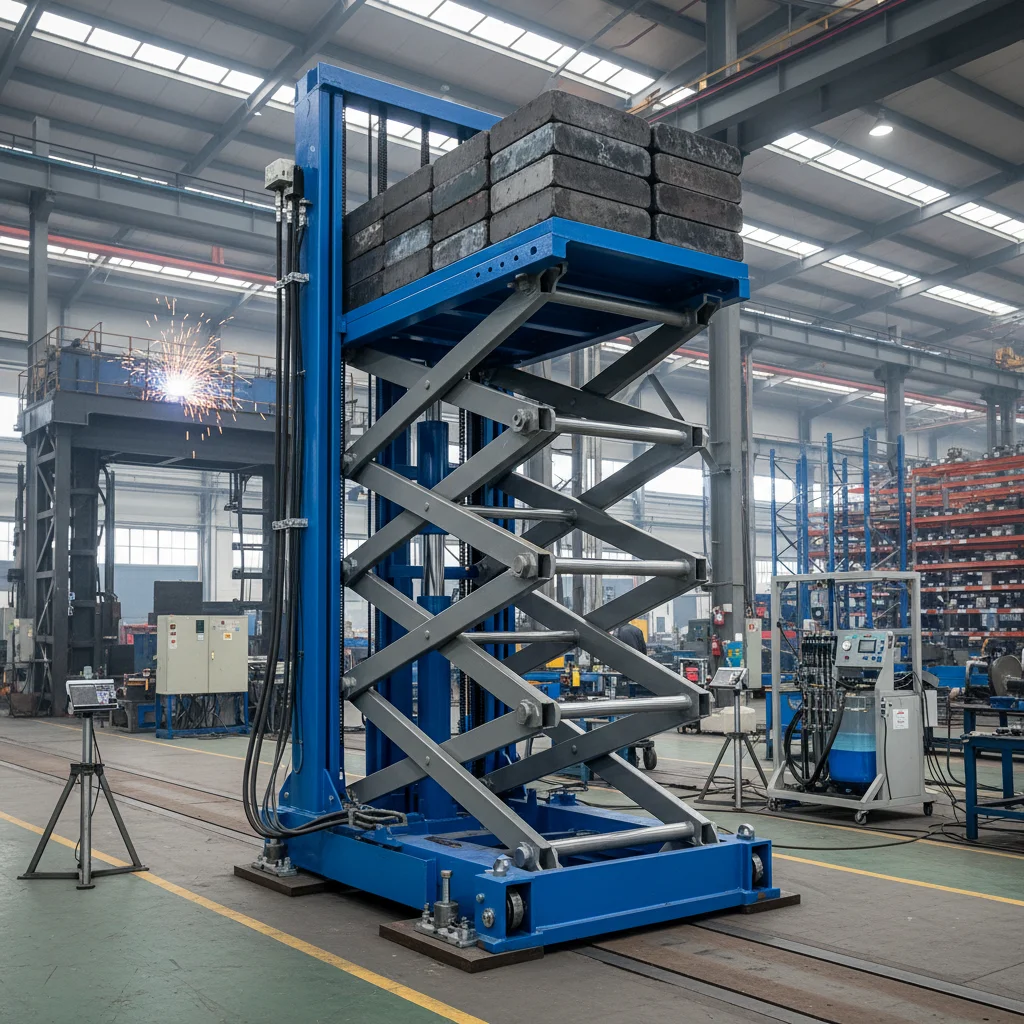
In the modern industrial landscape, the demand for precision and power in material handling has led to the widespread adoption of high-capacity lifting systems. A stationary lift table serves as a critical anchor in manufacturing workflows, allowing operators to move massive loads vertically with unmatched stability and safety. By eliminating the risks associated with manual lifting and reducing the reliance on mobile forklifts for static positioning, these systems optimize the spatial efficiency of any warehouse or factory floor.
The global shift toward ergonomic workstations is driving the integration of advanced hydraulic technology into fixed lifting platforms. Whether it is in the aerospace sector or heavy automotive assembly, the ability to precisely align a heavy component at the optimal working height is no longer a luxury but a necessity for productivity. These systems are engineered to withstand rigorous duty cycles, ensuring that downtime is minimized while throughput is maximized across the entire production line.
Investing in a professional stationary lift table allows companies to adhere to strict ISO safety standards while significantly reducing workplace strain. By combining high-strength steel structures with precision-engineered hydraulic manifolds, these tools transform hazardous lifting tasks into controlled, repeatable processes that protect both the operator and the high-value cargo.

Industrial Engineering of Stationary Lift Tables
The engineering behind a professional stationary lift table focuses on the synergy between structural rigidity and hydraulic precision. Built with heavy-gauge high-strength rectangular steel tubing and full-penetration welds, these tables are designed to handle capacities from 1,000 kg to over 10,000 kg without deflection. This ensures that even when lifting the most demanding industrial loads, the platform remains perfectly level, preventing load shifts that could lead to accidents.
Beyond the raw strength of the frame, the integration of versatile platform options allows these units to fit into specific manufacturing niches. From non-slip checkered steel plates for general logistics to specialized roller or ball transfer decks for automotive assembly, the structural versatility ensures a seamless transition of materials from the lift to the next stage of production, enhancing overall ergonomic workflows.
Core Components and Hydraulic Mechanisms
At the heart of every stationary lift table is a precision-engineered hydraulic system. This typically includes high-efficiency gear or piston pumps, which can be specified as standard or explosion-proof depending on the environment. These pumps drive the scissor mechanism—available in single, double, or triple configurations—to achieve the desired lifting height while maintaining a compact collapsed profile.
Control and stability are managed through advanced manifold-mounted valves. These components provide a smooth, metered flow of hydraulic fluid, which is essential for "wobble-free" lifting. This precision is particularly critical when dealing with offset loads, where the system must distribute pressure evenly across the scissor arms to maintain synchronization and prevent tilting.
The power supply options are equally diverse, supporting a range of voltages from 208V to 575V. This flexibility allows the equipment to be integrated into various global electrical grids, while the 24V AC/DC control voltage ensures that operator interfaces—whether push-button, foot switch, or remote pendants—operate safely and intuitively.
Key Factors for Operational Durability
Maintaining a stationary lift table over a ten-year lifecycle requires a focus on reducing friction and wear. The use of self-lubricating bushings and centralized lubrication systems significantly lowers the requirement for manual daily maintenance, reducing the total cost of ownership and preventing unexpected downtime in fast-paced environments.
Material selection is the second pillar of durability. For standard industrial use, industrial-grade paint or hot-dip galvanizing protects the steel from corrosion. However, for pharmaceutical or food processing environments, a stationary lift table can be constructed entirely from stainless steel to withstand rigorous washdown procedures without compromising structural integrity.
Finally, the integration of sealed bearings at all pivot points ensures that contaminants like dust and metal shavings do not enter the mechanical joints. This focus on "sealed" engineering ensures that the heavy-duty cycles of the scissor mechanism remain smooth, preserving the precision of the lift over millions of operations.
Performance Comparison and Load Optimization
When comparing a standard lift to a heavy-duty stationary lift table, the differences in engineering become apparent. While standard units suffice for light warehouse tasks, heavy-duty models utilize reinforced heavy-gauge steel and advanced sensor interlocks to handle loads exceeding 10 tons. This jump in capacity is matched by a shift from basic manual stops to sophisticated safety monitoring systems.
Load optimization is achieved through precision engineering that ensures balanced weight distribution. By utilizing pilot-operated check valves, the system prevents uncontrolled descent, ensuring that the heavy-duty scissor lift remains a stable platform regardless of the weight applied.
Performance Rating of Stationary Lift Table Configurations
Global Industrial Applications and Use Cases
In the automotive industry, the stationary lift table is indispensable for chassis assembly. By integrating rotating tops or V-shaped decks, manufacturers can lift a vehicle frame to the exact height of a conveyor belt, allowing workers to perform installations without bending, thereby reducing workplace strain and increasing assembly speed.
Beyond automotive, the aerospace and pharmaceutical sectors utilize these lifts for handling oversized components and sanitary equipment. In cleanroom environments, the stainless steel construction prevents contamination, while in aerospace, the 10,000+ kg capacity allows for the vertical movement of engine blocks and wing sections with millimeter precision.
Long-Term Value and Safety Integration
The long-term value of a heavy-duty stationary lift table lies in its ability to merge productivity with absolute safety. The integration of positive-action limit switches and edge-sensing strips prevents the platform from over-traveling or crushing obstructions, which is vital in high-traffic industrial zones.
Safety is further enhanced by pilot-operated check valves, which act as a fail-safe against hydraulic hose failure. This prevents the load from dropping suddenly, protecting the operator and the equipment. Additionally, emergency manual release valves ensure that platforms can be lowered safely even during a complete power failure.
From a financial perspective, the reduced maintenance cost—thanks to self-lubricating pivot points—and the increase in ergonomic efficiency lead to a rapid return on investment. By reducing the risk of worker injury and increasing the speed of material handling, these systems pay for themselves through operational gains.
Future Innovations in Lifting Technology
The future of the stationary lift table is moving toward full automation and digital integration. We are seeing the rise of IoT-enabled sensors that monitor hydraulic pressure and wear in real-time, allowing for predictive maintenance rather than reactive repairs. This shift ensures that a lift table never fails unexpectedly during a critical production run.
Sustainability is also becoming a core focus, with the development of more energy-efficient hydraulic pumps and the use of biodegradable hydraulic fluids. These innovations reduce the environmental footprint of heavy manufacturing while maintaining the ultra-high load capacities required for industrial applications.
Furthermore, the integration of smart control panels with NEMA-rated enclosures and remote PLC (Programmable Logic Controller) connectivity allows these lifts to be synchronized with wider factory automation systems, creating a truly seamless, autonomous material flow.
Comparison of Stationary Lift Table Technical Specifications
| Configuration |
Max Capacity |
Safety Level |
Maintenance Need |
| Standard Single Scissor |
1,000 - 3,000 kg |
Basic (Limit Switch) |
Moderate |
| Heavy-Duty Double |
3,000 - 6,000 kg |
High (Check Valves) |
Low (Self-Lub) |
| Ultra-Heavy Triple |
6,000 - 10,000+ kg |
Advanced (Photo-Eye) |
Low (Centralized) |
| Stainless Steel Washdown |
1,000 - 5,000 kg |
High (Sanitary) |
Very Low |
| Roller Deck Integrated |
2,000 - 8,000 kg |
Moderate (Edge Sensing) |
Low |
| Custom V-Deck |
Up to 15,000 kg |
Extreme (Custom) |
Low |
FAQS
Our standard heavy-duty models accommodate capacities from 1,000 kg up to 10,000 kg. For specialized industrial requirements, such as aerospace or heavy machinery tooling, we offer custom engineering to support loads even exceeding 10,000 kg, ensuring the structural integrity is maintained through reinforced steel framing.
Yes, we provide specialized stainless steel models specifically designed for sanitary material handling. These units feature washdown capabilities and corrosion-resistant finishes, making them ideal for pharmaceutical labs and food processing plants where hygiene standards are strictly enforced.
The system integrates pilot-operated check valves that prevent uncontrolled descent in the event of a hydraulic leak. Additionally, we include positive-action limit switches and optional photo-eye sensors to stop operation if an obstruction is detected, ensuring maximum operator safety.
Every unit is equipped with a manual emergency release valve. This allows authorized personnel to safely and slowly bleed the hydraulic pressure, facilitating a controlled descent of the platform to the ground level without the need for electrical power.
We offer a wide array of platform customizations, including integrated roller decks for easy sliding, ball transfer units for omnidirectional movement, V-shaped decks for cylindrical loads, and rotating tops to align cargo perfectly with production lines.
Depending on the model and load requirement, we support single-phase power for lighter units and 3-phase industrial power (208V, 230V, 460V, or 575V) for heavy-duty applications, ensuring compatibility with your existing facility infrastructure.
Conclusion
In summary, the implementation of a heavy-duty stationary lift table is a strategic investment in both operational efficiency and worker safety. By combining high-strength steel construction with precision hydraulic controls and comprehensive safety interlocks, these systems solve the complex challenges of vertical material handling for loads up to 10,000 kg and beyond. From the durability of self-lubricating components to the versatility of customizable decks, every aspect of these tables is engineered to optimize industrial throughput while adhering to the highest safety standards.
Looking forward, the integration of smart sensors and sustainable hydraulic technologies will continue to redefine the capabilities of fixed lifting solutions. For any facility aiming to reduce ergonomic strain and eliminate bottlenecks in their production line, upgrading to a professional-grade lifting system is the most effective path toward a modernized, safer, and more productive workplace. Visit our website for more information: www.lifthpro.com