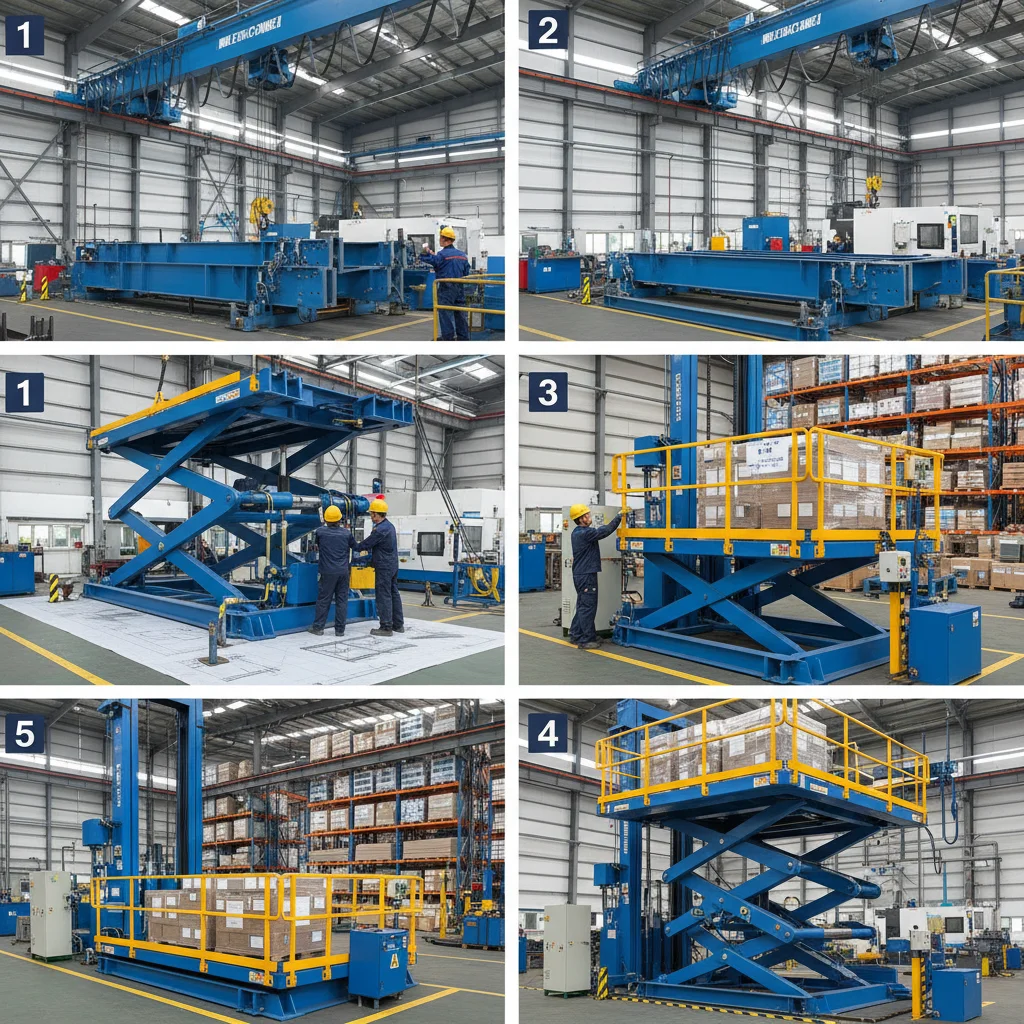
In the modern industrial landscape, the role of a building contractor extends far beyond simple masonry and framing; it now encompasses the integration of high-performance material handling systems. As facilities grow in scale and complexity, the need for robust vertical lifting solutions becomes paramount to ensure operational efficiency and worker safety.
Integrating heavy-duty scissor lift tables into a facility's design allows a professional building contractor to optimize the ergonomic flow of a warehouse or manufacturing plant. By reducing manual lifting and streamlining the movement of heavy loads, these systems transform a static building into a dynamic production environment.
Understanding the synergy between structural construction and industrial equipment is essential for any building contractor aiming to deliver a turnkey solution. This article explores the technical specifications and strategic advantages of deploying heavy-duty scissor lift systems within industrial infrastructure.

Mechanical Backbone of Industrial Lifting
The mechanical structure of a heavy-duty scissor lift table is engineered to be the bedrock of material movement, providing the stability required for loads ranging from 1,000 kg to 10,000 kg. Fabricated from high-strength, heavy-gauge steel rectangular tubing, the scissor legs are precision-welded and reinforced with cross bracing. This prevents deflection under full load, a critical detail that a building contractor must consider when planning the floor load-bearing capacity of a facility.
The platform itself is constructed from thick, non-slip checkered steel plate, ensuring safety during heavy-traffic operations. Depending on the specific needs of the site, options such as roller decks or ball transfer units can be integrated. The base frame is designed for secure floor mounting with pre-drilled holes for anchor bolts, ensuring that the system remains immovable even during peak operation cycles.
High-Precision Hydraulic Power Systems
At the heart of the lifting operation is a sophisticated hydraulic system designed for precision and control. A high-efficiency electric motor drives either a gear or piston pump, specifically sized to match the lift capacity. For a building contractor overseeing the electrical layout, it is important to note that these motors are available in standard, continuous-duty, or explosion-proof configurations to meet various safety codes.
The hydraulic cylinders feature chromed, ground pistons and high-quality seals to ensure a leak-free environment over thousands of cycles. To prevent any uncontrolled descent, pilot-operated check valves are utilized to lock the platform firmly in position. This redundancy is essential for maintaining a safe working environment in high-intensity industrial zones.
Control is managed through manifold-mounted directional valves that provide a smooth, metered flow for both raising and lowering. Additionally, built-in flow control valves allow the operator to adjust lowering speeds, while pressure relief valves act as a fail-safe to protect the entire system from catastrophic overload.
Advanced Electrical Control and Safety
The electrical system ensures that the equipment is intuitive to operate and easily integrated into facility automation. For any building contractor, the NEMA-rated enclosures housing motor starters and overload protection provide the necessary durability against industrial dust and moisture.
Safety is prioritized through positive-action limit switches that automatically cut power at the upper and lower travel limits. Furthermore, a building contractor can specify the addition of intermediate position switches for programmable stop heights, which is ideal for assembly lines with multiple workstations.
To prevent accidents, the system can interface with safety gates, light curtains, or floor-level sensors. These interlocks ensure the lift operates only when safe conditions are met, protecting personnel from pinch points and unexpected movements.
Performance Metrics and Load Capacities
Performance in heavy-duty lifting is measured by the ability to maintain stability under offset loads and the duration of the duty cycle. The synchronous, wobble-free lifting mechanism is a result of precision bushings and bearings that minimize friction, ensuring that the platform remains level regardless of how the load is distributed.
When a building contractor evaluates these systems, the primary focus is usually on the capacity-to-height ratio. Whether utilizing a single, double, or triple scissor configuration, the goal is to achieve the required lift height without compromising the structural integrity of the steel frame.
Building Contractor Equipment Performance Analysis
Versatile Application Scenarios
The applications for these lift tables are vast, ranging from heavy manufacturing to pharmaceutical processing. In assembly plants, they are used to position aircraft engines or vehicle frames at ergonomic heights, significantly reducing workplace strain and increasing productivity.
In warehousing and distribution, these systems facilitate the loading and unloading of pallets at dock heights. A building contractor often integrates these lifts into the loading bay design to ensure a seamless transition between the warehouse floor and transport vehicles.
Long-Term Reliability and Maintenance
Durability is the hallmark of the heavy-duty scissor lift. All structural components are manufactured from heavy-gauge steel with full-penetration welds, finished with industrial-grade paint or hot-dip galvanizing for superior corrosion resistance. This ensures the equipment survives harsh environments, from chemical plants to outdoor storage yards.
Maintenance is streamlined through the use of self-lubricating pivot points and sealed bearings. An optional centralized lubrication system further reduces the need for manual intervention, ensuring that the machine remains in peak condition with minimal downtime.
For the building contractor focusing on the lifecycle cost of a facility, these low-maintenance features are vital. The hydraulic power unit's easy-fill reservoir with a sight glass and breather filter allows for quick inspections, preventing costly hydraulic failures before they occur.
Customization and Future Adaptability
One of the most significant advantages of these systems is their ability to be tailored to specific industrial needs. Whether it is a V-shaped deck for handling cylindrical loads or a rotating top for precise positioning, the versatility allows a building contractor to provide a truly customized workspace.
For sanitary environments like food processing, stainless steel construction with washdown capability is available. This ensures compliance with strict health and safety regulations while maintaining the heavy-lifting capabilities of the scissor mechanism.
Looking forward, the integration of these lifts with automated storage and retrieval systems (ASRS) is becoming standard. By combining physical lifting power with digital control, facilities can achieve a higher level of automation and efficiency.
Customization Options for Industrial Scissor Lift Systems
| Customization Type |
Primary Benefit |
Industry Fit |
Durability Rating |
| Roller Deck |
Easier load transfer |
Logistics/Warehouse |
9/10 |
| Stainless Steel |
Corrosion resistance |
Food & Pharma |
10/10 |
| Rotating Top |
Precision orientation |
Automotive Assembly |
8/10 |
| V-Shaped Deck |
Cylindrical load stability |
Heavy Machinery |
9/10 |
| Explosion-Proof Motor |
Hazardous environment safety |
Chemical Plants |
10/10 |
| Ball Transfer Units |
Omni-directional movement |
Precision Engineering |
8/10 |
FAQS
Depending on the goods, most standard warehouses require lift tables with capacities between 2,000 kg and 5,000 kg. However, for heavy industrial components, a building contractor should specify units that can handle 10,000 kg or more to ensure a safety margin and long-term equipment viability.
Yes, they can be. For food and pharmaceutical applications, we offer stainless steel construction with washdown capabilities. This allows the lift to be cleaned with high-pressure water and chemical agents without risking corrosion or contamination.
Pilot-operated check valves act as a hydraulic lock. In the event of a hose failure or power loss, these valves prevent the hydraulic fluid from flowing back into the reservoir, thereby stopping the platform from falling and protecting the operator.
Absolutely. By varying the number of scissor legs (single, double, or triple), we can achieve different lifting heights. Additionally, intermediate limit switches can be installed to create precise, programmable stop heights for different stages of assembly.
Regular maintenance includes checking hydraulic oil levels via the sight glass, inspecting seals for leaks, and ensuring the pivot points are lubricated. Units with self-lubricating bushings significantly reduce the frequency of these tasks.
We provide a wide range of power options to suit any facility. Standard supply options include 208V, 230V, 460V, or 575V 3-phase power, with single-phase options available for smaller, lighter-duty units.
Conclusion
The integration of heavy-duty scissor lift tables into industrial design is a critical factor in enhancing operational productivity and safety. By focusing on rugged mechanical construction, precise hydraulic control, and comprehensive electrical safety, these systems provide a reliable solution for the most demanding vertical lifting challenges. From the initial planning phase by a building contractor to the final deployment in a high-traffic warehouse, the emphasis on durability and customization ensures that the equipment can evolve alongside the business.
As industry 4.0 continues to drive automation, the synergy between structural engineering and smart material handling will only grow. Investing in high-quality, customizable lifting solutions not only reduces workplace strain but also builds a foundation for future scalability and efficiency. To learn more about integrating these systems into your next project, visit our website: www.lifthpro.com.