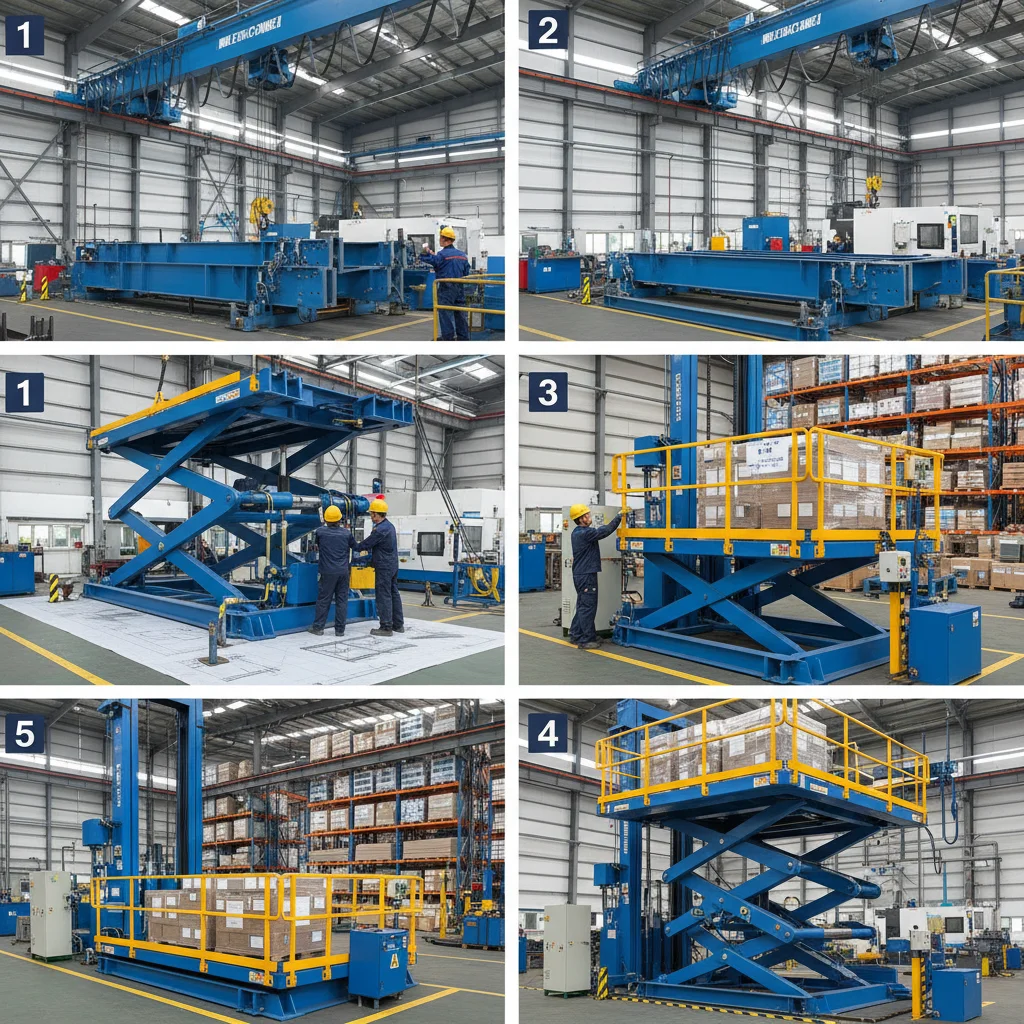
In the rapidly evolving landscape of global logistics, partnering with a professional automated warehouse company has become a strategic imperative for businesses aiming to scale. As e-commerce volumes surge and consumer expectations for next-day delivery become the norm, the reliance on manual sorting and retrieval is no longer sustainable. An automated approach integrates robotics, smart software, and high-performance hardware to eliminate bottlenecks and maximize spatial utility.
The global impact of transitioning to a specialized automated warehouse company framework is evident in the drastic reduction of operational errors and labor costs. According to industry benchmarks, automation can increase order fulfillment accuracy to nearly 99.9%, while significantly lowering the risk of workplace injuries. By streamlining the flow of goods from the receiving dock to the final shipment, companies can achieve a level of throughput that was previously impossible.
Understanding the nuances of warehouse automation is not just about buying machines; it is about designing a cohesive ecosystem. From the installation of heavy-duty Hydraulic Lift Tables to the implementation of sophisticated Warehouse Management Systems (WMS), the goal is to create a seamless transition of materials. This guide explores how an automated warehouse company transforms traditional storage into a high-velocity profit center.

The Global Relevance of an Automated Warehouse Company
The demand for a reliable automated warehouse company has skyrocketed as global supply chains face unprecedented volatility. With the rise of "Just-in-Time" delivery models, the ability to move goods with precision and speed is no longer a luxury but a requirement for survival. ISO standards for logistics are increasingly emphasizing the role of automated material handling to ensure safety and consistency across international borders.
From the massive distribution centers in North America to the high-density urban hubs in Asia, the integration of automated systems addresses the critical challenge of labor shortages and rising real estate costs. By utilizing vertical space and autonomous movement, companies can handle ten times the volume of a traditional warehouse within the same physical footprint.
Defining the Scope of Automated Warehousing
At its core, an automated warehouse company provides the engineering and technology required to replace manual material handling with computer-controlled systems. This encompasses everything from Automated Storage and Retrieval Systems (AS/RS) to the sophisticated docking solutions, such as Dock Levelers and Mobile Dock Ramps, that facilitate the movement of goods between vehicles and the warehouse floor.
Beyond the hardware, this field is deeply connected to the digital transformation of industry. It involves the synchronization of Warehouse Control Systems (WCS) with physical actuators, ensuring that a pallet is moved from a Scissor Lift Table to a conveyor belt without a single second of wasted motion. It is the marriage of mechanical strength and digital intelligence.
In a broader humanitarian and economic sense, these solutions enable the rapid deployment of essential goods during crises. Whether it is distributing medical supplies or food aid, the infrastructure provided by an automated warehouse company ensures that life-saving materials reach their destination with minimal delay and maximum reliability.
Core Components for Operational Scalability
The first pillar of success for any automated warehouse company is Structural Durability. High-strength steel platforms, such as those used in fixed dock levelers, must withstand constant heavy-duty forklift traffic. Without a rugged foundation, the most advanced software in the world cannot prevent mechanical failure and subsequent downtime.
Hydraulic Precision serves as the second core component. Modern systems rely on synchronized dual cylinders and anti-burst valves to ensure that Lift Tables and loading platforms move smoothly. This precision is what allows an automated warehouse company to guarantee safety during the critical transition phase where cargo moves from a truck to the facility.
Finally, System Integration is what ties everything together. The ability to link a Mobile Dock Ramp with a centralized control panel ensures that the entire facility operates as a single, breathing organism. This scalability allows businesses to start with a few automated cells and expand into a fully autonomous facility as their revenue grows.
Efficiency Metrics in Automated Systems
Measuring the success of an automated warehouse company implementation requires looking at "Throughput Velocity." This is the speed at which a unit moves from the receiving dock to its storage slot. By implementing automated loading platforms, companies typically see a 50% increase in loading/unloading efficiency, drastically reducing truck turnaround times.
Another critical metric is the "Error Rate Reduction." Manual picking is prone to human fatigue, whereas automated systems maintain a consistent performance level 24/7. When the mechanical structure of the dock is perfectly aligned with the vehicle, the risk of product damage during transit is nearly eliminated.
Comparative Performance of Automated Warehouse Company Solutions
Global Applications and Industrial Use Cases
The versatility of an automated warehouse company is best seen in cold chain logistics. In these environments, speed is essential to maintain the temperature integrity of perishable goods. Automated docking systems allow refrigerated containers to be sealed and unloaded in record time, preventing spoilage and ensuring food safety for millions.
In remote industrial zones, such as mining or large-scale manufacturing plants, the use of heavy-duty Scissor Lift Tables and specialized loading platforms allows for the movement of oversized machinery. These applications demonstrate that automation is not just for small parcels; it is equally effective for the heaviest loads in the world's most demanding environments.
Long-Term Value and Sustainable Advantages
Investing in an automated warehouse company provides a profound return on investment through the lens of sustainability. By optimizing the path of every forklift and conveyor, companies significantly reduce their carbon footprint. Furthermore, the use of high-strength, corrosion-resistant coatings on mechanical structures ensures that equipment lasts for decades, reducing the need for frequent replacements and waste.
From a social perspective, automation elevates the role of the warehouse worker. Instead of performing grueling manual labor, employees are trained to manage and maintain sophisticated systems. This transition promotes dignity in the workplace, shifts the focus toward technical skill development, and creates a safer environment by removing humans from high-risk loading zones.
The psychological impact on the workforce is equally significant. When a facility is equipped with reliable, safe, and efficient tools from a reputable automated warehouse company, employee stress is reduced. The predictability of an automated system eliminates the chaos of manual scheduling, leading to higher job satisfaction and lower turnover rates.
Future Trends in Warehouse Automation Technology
The future of the automated warehouse company is being shaped by the integration of AI and the Internet of Things (IoT). We are moving toward "Predictive Maintenance," where sensors on a hydraulic lift cylinder can alert technicians to a potential failure before it happens. This shifts the paradigm from reactive repair to proactive optimization.
Green energy is also playing a pivotal role. We are seeing a shift toward solar-powered loading docks and regenerative braking systems in lift tables that feed energy back into the warehouse grid. This evolution ensures that high-throughput logistics can coexist with global net-zero emissions goals.
Finally, the rise of "Dark Warehouses"—facilities that operate entirely without human lighting or climate control—is becoming a reality. This extreme level of automation, facilitated by the most advanced automated warehouse company designs, allows for 24/7 operation with zero energy waste on human-centric amenities.
Comparison of Automation Technologies by Implementation Stage
| Technology Component | Initial Investment | Operational Impact | Longevity (Years) |
|---|
| Fixed Dock Levelers | Medium | High Throughput | 15-20 |
| Hydraulic Lift Tables | Low-Medium | Ergonomic Gain | 10-15 |
| Mobile Dock Ramps | Low | High Flexibility | 12-18 |
| AS/RS Robotics | High | Max Density | 10-12 |
| WMS Software | Medium | Total Control | 5-8 (Update cycle) |
| Smart Conveyors | Medium | Reduced Transit Time | 10-15 |
FAQS
An automated warehouse company reduces costs by minimizing human error, optimizing energy usage, and drastically increasing the speed of loading and unloading. By utilizing equipment like Hydraulic Lift Tables and Dock Levelers, businesses can reduce the labor required for repetitive tasks and decrease the time trucks spend idling at the dock, leading to lower fuel and labor expenses.
Yes, modern automation is highly modular. A professional automated warehouse company can implement "lite" versions of automation, such as Mobile Dock Ramps or standalone Scissor Lift Tables, which provide immediate efficiency gains without requiring a total facility overhaul. This allows smaller businesses to scale their automation as they grow.
When sourced from a quality automated warehouse company, mechanical equipment like fixed dock levelers can last 15 to 20 years with proper maintenance. The use of high-strength steel and anti-corrosion coatings ensures that these systems remain functional even in harsh outdoor or humid environments.
Safety is integrated into the design. Automated systems use limit switches, safety interlocks, and anti-burst hydraulic valves. Leading automated warehouse companies also include vehicle restraint systems and emergency manual lowering valves to ensure that equipment can be safely managed even during a power failure.
Absolutely. Most automated warehouse companies design their hardware to be "software agnostic" or provide API integrations that allow their lift tables and conveyor systems to communicate directly with existing Warehouse Management Systems (WMS) for real-time tracking and control.
The first step is a comprehensive workflow audit. An automated warehouse company will analyze your current throughput, peak volume times, and physical constraints to recommend a tailored mix of equipment—such as the right combination of Dock Levelers and Lift Tables—to maximize your ROI.
Conclusion
Integrating the solutions of a professional automated warehouse company is more than a technical upgrade; it is a total transformation of operational capability. By combining durable mechanical structures, precise hydraulic systems, and intelligent electrical controls, businesses can eliminate the friction inherent in traditional logistics. From increasing throughput by over 50% to enhancing worker safety and sustainability, the long-term value of automation is undeniable.
As we look toward a future defined by AI and green energy, the gap between automated and manual facilities will only widen. Those who invest in scalable, high-quality infrastructure today—such as Hydraulic Lift Tables and advanced loading platforms—will be the ones leading their industries tomorrow. We invite you to modernize your logistics chain and experience the precision of world-class automation. Visit our website: www.lifthpro.com