Hydraulic Mobile Dock Ramp for Container Loading System Composition
The hydraulic mobile dock ramp consists of three main components:
1. Mechanical Structure
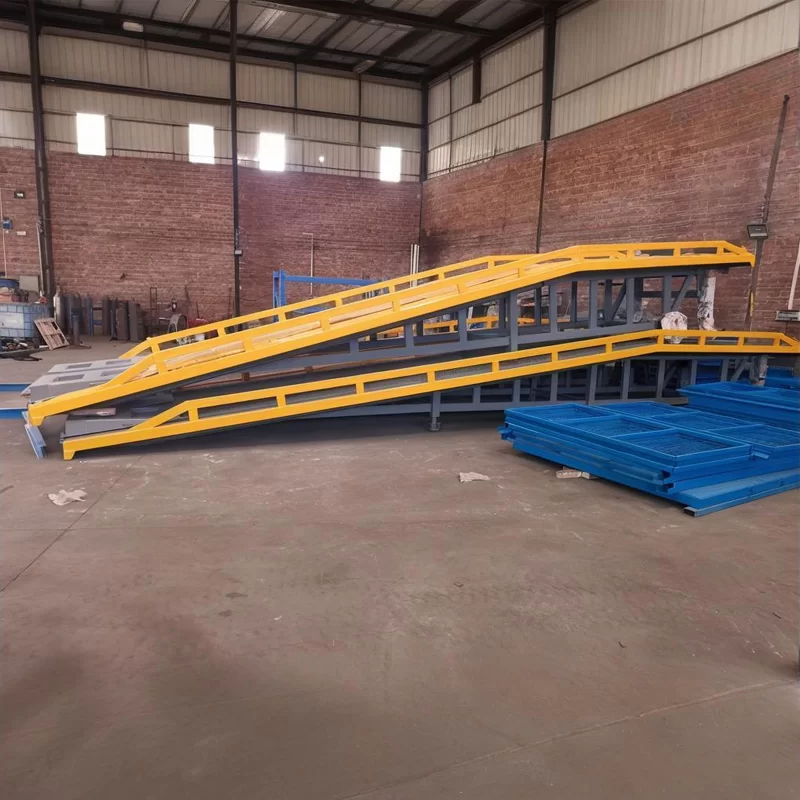
The mechanical structure comprises the main frame, main ramp plate, lip plate, and undercarriage.
Main Frame: Fabricated from high-strength steel profiles with a reinforced box-section design to withstand dynamic loading during forklift operation.
Main Ramp Plate: The primary driving surface, constructed from non-slip checkered steel plate to ensure traction even in wet or oily conditions.
Lip Plate: A hinged extension at the front of the ramp that rests securely on the truck bed, providing a smooth transition and compensating for vehicle height variations.
Undercarriage: Equipped with heavy-duty casters and pneumatic or solid tires, allowing one operator to easily maneuver the ramp into position. Stabilizing outriggers or screw-type legs are deployed during operation to transfer load to the ground and prevent movement.
2. Hydraulic System
The hydraulic system powers both the raising and lowering of the ramp and the extension of the lip plate.
A compact electro-hydraulic pump unit (operating on standard single-phase or three-phase power, or optionally a manual pump) drives hydraulic cylinders.
The main lift cylinder raises the entire ramp to align with the truck bed height.
The lip cylinder extends and retracts the lip plate, allowing it to be safely positioned over the truck edge and folded back during transport.
Built-in flow control valves ensure smooth, controlled movement, while check valves prevent unintended descent.
3. Electrical System
The electrical system provides safe, user-friendly operation.
A handheld or panel-mounted pendant controller allows the operator to raise, lower, and extend the lip from a safe position.
All control circuits operate at low voltage (typically 24V) for operator safety.
An emergency stop button and manual lowering valve are provided for safe operation during power failures or maintenance.
Hydraulic Mobile Dock Ramp for Container Loading Key Features and Performance Advantages
High Load Capacity: Rated capacities typically range from 6,000 kg to 20,000 kg, accommodating standard counterbalanced forklifts and heavy loads.
Superior Mobility: The unit is equipped with a towing hitch and high-quality casters, allowing it to be towed by a forklift or pallet jack and manually maneuvered into position. This eliminates the need for multiple fixed docks and enables rapid deployment across different loading bays.
Height Adjustment Range: The hydraulic lift mechanism provides a wide height adjustment range (typically 1,000 mm to 1,800 mm or more), allowing the ramp to accommodate a variety of vehicles, from small delivery vans to standard container trucks.
Safety Features:
Non-Slip Surface: The ramp and lip plates are covered with high-traction checkered plate or optional diamond mesh to prevent forklift slippage.
Safety Curbs: Integrated side curbs prevent accidental wheel runoff.
Stabilizing Legs: Adjustable support legs or outriggers transfer the load directly to the ground, ensuring stability and eliminating bounce during loading operations.
Manual Override: In the event of power failure, the ramp can be lowered manually using the emergency release valve, ensuring the vehicle can be safely released.
Durable Construction: Hot-dip galvanized or powder-coated finishes provide excellent corrosion resistance, making the ramp suitable for both indoor and outdoor use. Heavy-duty bearings and sealed hydraulic components reduce maintenance requirements and extend service life.
Hydraulic Mobile Dock Ramp for Container Loading Application Scenarios
Facilities Without Fixed Docks: Warehouses, distribution centers, and factories that lack permanent loading docks can use mobile ramps to instantly create a loading point.
Multiple Loading Bays: A single mobile ramp can serve multiple doors or yard locations, reducing capital expenditure compared to installing fixed dock levelers at each bay.
Temporary or Seasonal Operations: Ideal for construction sites, temporary storage yards, agricultural facilities, and seasonal high-volume shipping periods.
Container Loading and Unloading: Specifically designed for standard shipping containers (20 ft, 40 ft, etc.), allowing forklifts to drive directly from ground level into the container.
- How Does a Hydraulic Dock Leveler Work
A hydraulic dock leveler works by using hydraulic power to raise and lower the loading platform and position the front lip according to the height of the truck or container. In a mobile configuration, this operating principle is combined with a wheeled undercarriage so the loading equipment can be positioned where it is required. The hydraulic mobile dock ramp on the supplied product page is designed as a self-contained loading and unloading solution for connecting warehouse floors with container trucks or freight vehicles.
The working process begins with positioning the ramp at the loading point. The main lift cylinder raises the ramp platform to align with the truck bed, while a separate lip cylinder extends and retracts the lip plate. The lip is designed to rest securely on the truck bed and provide a transition between the ramp and vehicle. Built-in flow-control valves are used to maintain controlled hydraulic movement, while check valves help prevent unintended descent during operation.
The hydraulic system is powered through a compact electro-hydraulic pump unit. The product information states that the pump can operate with standard single-phase or three-phase power, with a manual pump also available as an option. This gives procurement teams some flexibility when considering the power conditions at the intended loading location.
The container loading ramp is also designed around forklift operation. Its main ramp plate uses non-slip checkered steel plate, while the lip plate provides the transition onto the truck bed. The undercarriage incorporates heavy-duty casters and pneumatic or solid tires, allowing the equipment to be moved into position. Once positioned, stabilizing outriggers or screw-type legs transfer the load to the ground and help prevent movement during loading operations.
The supplied product information states that rated capacities typically range from 6,000 kg to 20,000 kg depending on the configuration, while the height adjustment range is typically 1,000 mm to 1,800 mm or more. These are stated product-range specifications rather than one fixed rating for every model, so the required capacity and working height should be confirmed for the selected configuration.
For facilities without permanent loading docks, the hydraulic operating principle provides more than simple height adjustment. It combines platform lifting, lip positioning, and mobile deployment in one loading system. This allows the hydraulic mobile dock ramp to support container loading and unloading where the loading position may change between different bays or yard locations.
- How to Install a Hydraulic Dock Leveler
Installing a hydraulic dock leveler in a mobile configuration is different from installing a permanently recessed dock leveler. The supplied hydraulic mobile dock ramp is designed as a movable loading unit rather than equipment that is built permanently into a dock pit. Installation therefore focuses on correct positioning, connection to the vehicle, stabilization, and preparation for hydraulic operation.
The first consideration is the loading location. The ramp should be moved into a position where the main ramp plate can provide a suitable approach for the forklift and the lip can reach the truck or container bed. The product information states that the unit is equipped with a towing hitch and high-quality casters and can be towed by a forklift or pallet jack or manually maneuvered into position. This mobility allows one unit to serve different loading bays or yard locations.
Once the ramp is positioned, the stabilizing outriggers or screw-type legs are deployed. Their purpose is to transfer the operating load directly to the ground and prevent unwanted movement during forklift operations. This step is important because the equipment is designed to move between locations but must remain stable when it becomes part of the loading path.
The next stage is hydraulic adjustment. The main lift cylinder raises the ramp to the required loading height, while the lip cylinder extends the lip plate toward the truck bed. The product page describes the lip as a hinged extension that rests securely on the truck bed and compensates for vehicle height variations. The operator can control these movements through a handheld or panel-mounted pendant controller.
Electrical preparation depends on the selected configuration. The electro-hydraulic pump can operate on standard single-phase or three-phase power, while an optional manual pump is also available. The control circuits operate at low voltage, typically 24V, and the system includes an emergency stop button and manual lowering valve for situations such as power failure or maintenance.
For container loading, the final operating position should allow the lip to sit correctly on the container or vehicle edge before forklift traffic begins. The ramp plate, lip, stabilizing legs, and hydraulic system should all be checked as part of the operating preparation. The product's non-slip checkered steel plate is intended to provide traction for forklift movement, including conditions where the surface may be wet or oily.
Because this is a mobile system for a dock leveler for shipping containers, installation does not mean permanently fixing the equipment to one loading bay. Instead, the focus is on establishing a stable loading connection each time the ramp is deployed. That characteristic makes the equipment appropriate for facilities that need a loading solution without constructing a permanent dock at every operating location.
- Key Features & Performance Advantages of Hydraulic Mobile Dock Ramp
The main performance characteristics of the hydraulic mobile dock ramp come from the combination of hydraulic height adjustment, mobile positioning, load capacity, and a structure designed for forklift traffic. The supplied product information states that typical rated capacities range from 6,000 kg to 20,000 kg, allowing different configurations to accommodate standard counterbalanced forklifts and heavy loads. The exact capacity depends on the selected model and should be confirmed during project specification.
Mobility is one of the defining characteristics of this equipment. The unit incorporates a towing hitch and heavy-duty casters, allowing it to be towed by a forklift or pallet jack or manually maneuvered into position. This means one ramp can be deployed at different loading bays or yard locations instead of being permanently associated with a single dock. For facilities with several loading points, this can make the equipment easier to integrate into changing material-handling workflows.
Height adjustment is another important performance feature. The hydraulic lift mechanism provides a typical adjustment range of 1,000 mm to 1,800 mm or more, depending on the configuration. This allows the ramp to accommodate different vehicle heights, from smaller delivery vehicles to standard container trucks. The ability to adjust the platform is particularly relevant where one loading area handles vehicles with different bed levels.
The mechanical structure is designed around repeated forklift access. The main frame uses high-strength steel profiles with a reinforced box-section design, while the main ramp plate uses non-slip checkered steel plate. The lip plate provides the transition onto the vehicle, and the undercarriage is designed for movement between loading positions.
The hydraulic system also contributes to controlled operation. The main lift cylinder handles platform adjustment, while the lip cylinder controls the front lip. Flow-control valves support smooth movement, and check valves help prevent unintended descent. These components allow the hydraulic system to perform the height and lip adjustments required for loading operations without relying on manual repositioning of the platform.
From a procurement perspective, the hydraulic mobile dock ramp should therefore be evaluated through its complete configuration rather than through hydraulic power alone. Capacity, height range, mobility, ramp construction, lip arrangement, power supply, and intended loading environment all influence the appropriate model.
- System Composition of Container Loading Ramp
The container loading ramp consists of three principal systems: the mechanical structure, hydraulic system, and electrical system. Each part has a specific role in creating a mobile loading connection between ground level and a container or freight vehicle.
The mechanical structure includes the main frame, main ramp plate, lip plate, and undercarriage. The main frame is fabricated from high-strength steel profiles with a reinforced box-section structure intended to withstand dynamic loading during forklift operation. The main ramp plate forms the primary driving surface and uses non-slip checkered steel plate for traction. The lip plate is hinged and designed to rest on the truck bed, providing a continuous transition for forklift movement.
The undercarriage provides the mobility required by the product. It uses heavy-duty casters together with pneumatic or solid tires. A towing hitch allows the unit to be moved by a forklift or pallet jack, while manual maneuvering is also possible. Stabilizing outriggers or screw-type legs are then deployed during operation to transfer the load to the ground.
The hydraulic system controls the primary lifting functions. A compact electro-hydraulic pump drives the hydraulic cylinders. The main lift cylinder raises the ramp platform, while the lip cylinder extends and retracts the lip plate. Flow-control valves support smooth hydraulic movement and check valves help prevent unintended platform descent. An optional manual pump is also available according to the supplied product information.
The electrical system provides the operator interface. A handheld or panel-mounted pendant controller allows the operator to raise, lower, and extend the lip from a suitable position. The control circuits operate at low voltage, typically 24V, and the equipment includes an emergency stop button and manual lowering valve. These components are integrated into the operating system rather than treated as separate accessories.
For container loading, the three systems work together. The mechanical structure carries the operating load, the hydraulic system adjusts the platform and lip, and the electrical system provides control. This division of functions is important when procurement teams evaluate the equipment because a loading ramp is not simply a steel access surface. Its performance depends on how the structure, hydraulic components, mobility system, and controls operate as one unit.
The product information specifically describes the ramp for standard shipping containers, including 20 ft and 40 ft containers, with forklifts able to drive directly from ground level into the container. This makes the configuration particularly relevant to container loading and unloading operations where permanent dock infrastructure is unavailable or impractical.
- Built-in Safety Features for Container Loading Operations
Safety during container loading depends on the stability of the ramp, traction on the driving surface, controlled hydraulic movement, and the operator's ability to manage the equipment from a suitable position. The supplied product information incorporates several features into the hydraulic mobile dock ramp rather than relying solely on external safety equipment.
The ramp and lip plates use high-traction checkered plate, with optional diamond mesh also available. The purpose is to reduce forklift slippage while the equipment is being used. Integrated side curbs provide additional protection against accidental wheel runoff. These features are part of the physical loading surface and are directly relevant to forklift access between the ground and container.
Stability is addressed through adjustable support legs or outriggers. When the ramp is positioned for operation, these components transfer the load directly to the ground and help prevent movement or bounce. This is particularly important for a mobile loading system because the equipment must first be movable between loading positions and then stable enough to support forklift traffic during operation.
The hydraulic circuit incorporates additional control features. Flow-control valves help maintain smooth movement of the ramp, while check valves prevent unintended descent. In the event of a power failure, the manual lowering valve or emergency release valve allows the ramp to be lowered manually. This gives the operator a means of dealing with loss of electrical power without leaving the loading platform in an uncontrolled position.
The electrical controls also include an emergency stop button, while the control circuits operate at low voltage, typically 24V. The pendant or panel-mounted controller allows the operator to control platform and lip movement from a safe position. These functions are integrated into the hydraulic and electrical systems of the equipment.
For procurement teams comparing a dock leveler for shipping containers with other loading solutions, the operating environment should be considered alongside the equipment's safety configuration. The supplied hydraulic mobile dock ramp is specifically designed for container trucks and freight vehicles and can be deployed where permanent loading docks are unavailable, where several loading bays need to share equipment, or where temporary loading operations are required.
The product information also states that hot-dip galvanized or powder-coated finishes are available for corrosion resistance, supporting indoor and outdoor use. Heavy-duty bearings and sealed hydraulic components are described as helping reduce maintenance requirements and extend service life.
For facilities reviewing a hydraulic mobile dock ramp manufacture specification, these details are relevant because safety is incorporated into the mechanical, hydraulic, and electrical design. The final selection should still be based on the actual forklift, load, vehicle, container, loading height, and operating conditions.
A mobile dock leveler can therefore be considered when a facility needs a movable loading connection while retaining hydraulic adjustment and integrated safety functions.
- Summary
The hydraulic mobile dock ramp offers a flexible, cost-effective solution for container loading and vehicle access where permanent docks are unavailable or impractical. Combining rugged construction, hydraulic convenience, and easy mobility, it enables efficient forklift loading operations across multiple locations with minimal infrastructure investment. Its comprehensive safety features and low maintenance requirements make it a reliable choice for logistics operations, warehousing, and industrial facilities seeking to optimize their material handling workflow.
-
Request a Quote for Hydraulic Logistics Equipment
Tell us your requirements and get a fast, customized solution for lift tables, dock levelers, and other hydraulic logistics equipment.