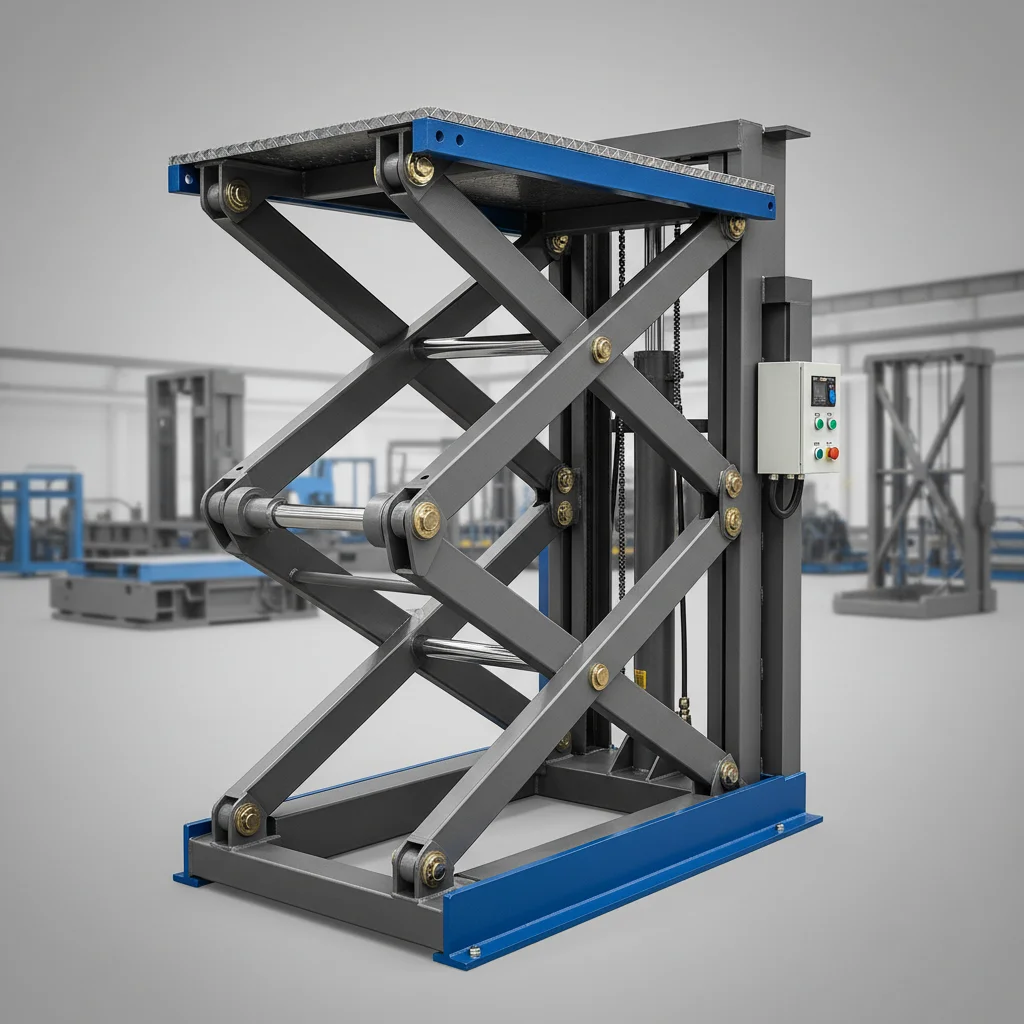
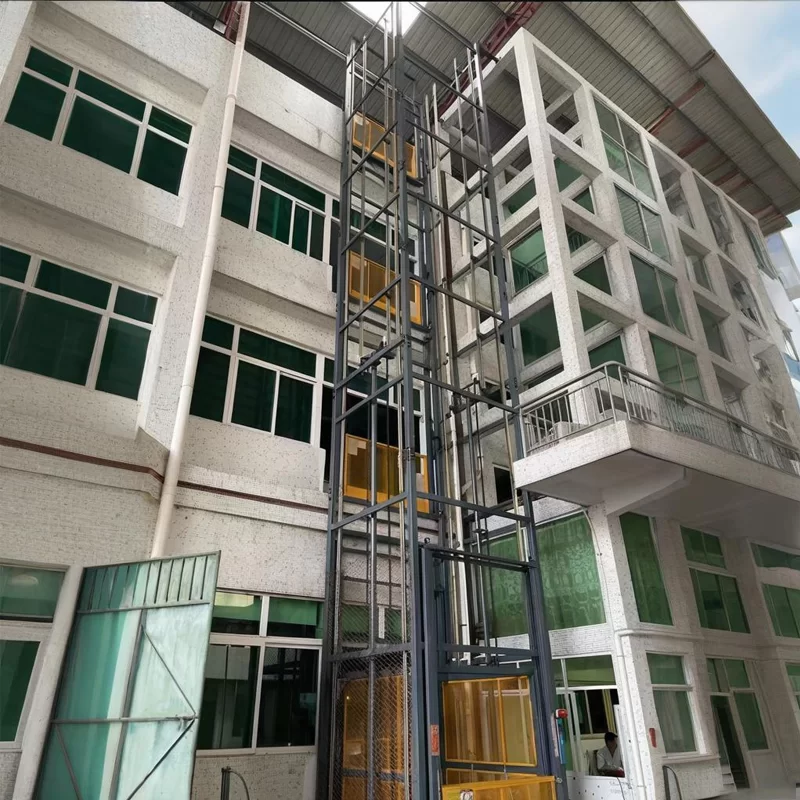
Fixed Hydraulic Goods Lift System Composition
The fixed hydraulic goods lift mainly consists of the following three systems:
1. Mechanical Structure
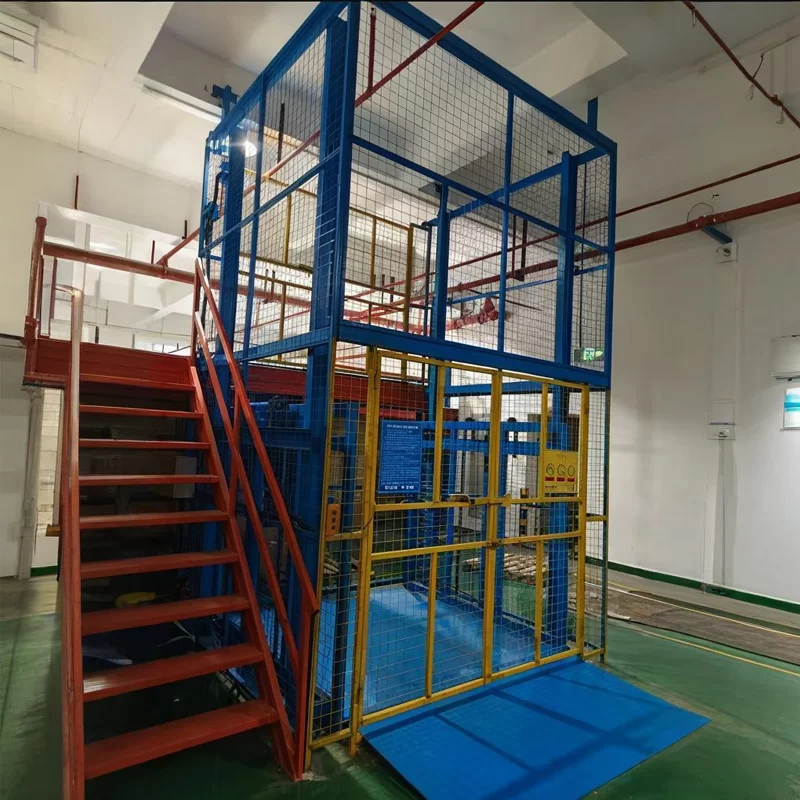
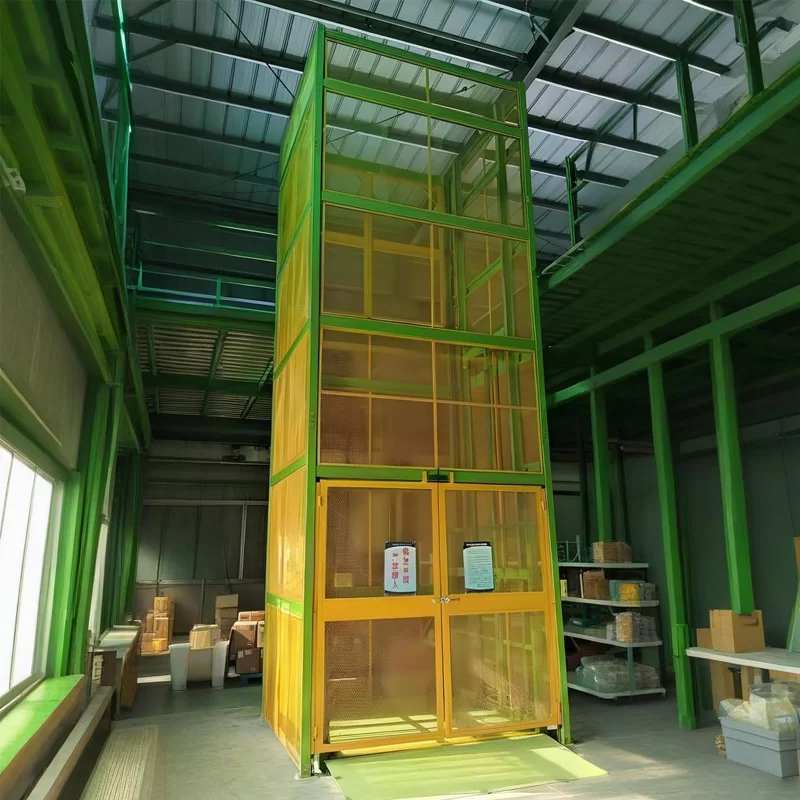
The mechanical structure comprises the guide rail frame, load platform, guiding system, and safety guards.
Guide Rail Frame: Made of high quality steel sections welded into an integral frame or segmented guide rails, which can be flexibly configured according to building height. The frame is securely connected to the building structure via embedded parts or chemical anchors to ensure stable operation.
Load Platform: The platform deck is covered with non slip checkered steel plate and is equipped with guardrails or enclosure panels on all sides. Manual or electric rolling doors, or swing doors, are installed at the entrance to prevent goods from falling during lifting.
Guiding System: Multiple sets of high precision nylon or roller guides are arranged around the platform, running smoothly along the guide rails. This ensures wobble free and drift free operation throughout the lifting travel while effectively protecting the hydraulic cylinder from lateral forces.
2. Hydraulic System
The hydraulic system consists of a hydraulic pump station, main cylinder, control valve group, and piping.
An electric motor drives a gear pump or piston pump to generate high pressure hydraulic oil, which is directed through a solenoid directional valve to control cylinder lifting and lowering. Large diameter single stage or multi stage telescopic cylinders are used to accommodate various stroke requirements.
The system integrates anti burst hydraulic locks, throttle valves, and relief valves. The anti burst lock automatically locks the cylinder in the event of an accidental hose rupture, preventing platform descent; the throttle valve provides stepless adjustment of lowering speed; and the relief valve provides overload protection, automatically stopping the lifting action when the load exceeds the rated capacity.
3. Electrical System
The electrical system includes the main control panel, operation panels, floor call stations, limit switches, and safety interlocks.
The control voltage uses safe low voltage (typically ≤24V). Each floor is equipped with an independent operation panel, and a portable or built in control box is provided on the platform itself, enabling multi point control.
High precision limit switches are installed at the upper and lower travel limits, automatically cutting off the power circuit when the designated height is reached. Optional features such as light curtain protection, anti pinching devices, and floor positioning sensors can be added to further enhance operational safety.
Fixed Hydraulic Goods Lift Main Features and Performance Advantages
High Load Capacity: Standard load capacities range from 500 kg to 10,000 kg, with higher capacities available upon request. Lifting heights can exceed 20 meters, meeting the requirements of most industrial and commercial buildings.
Minimal Civil Engineering Requirements:
No elevator hoistway is required; only a flat mounting wall or support structure is needed.
Low overhead height requirement; certain models can be installed without a machine room.
Pit depth is only 100–300 mm, and pit less installation is also available, significantly reducing civil construction costs and project lead times.
Smooth and Safe Operation:
The hydraulic drive ensures shock free starting and stopping, preventing goods from tipping or being damaged.
The multiple guide and rail system keeps the platform level throughout the travel, eliminating uneven load distribution.
A mechanical fall arrest device combined with hydraulic anti burst valves provides dual protection, ensuring that the platform cannot free fall under any abnormal condition.
Convenient and Efficient Operation:
Independent control at each floor allows the lift to be called on demand, eliminating waiting time.
Door opening/closing and lift movement can be interlocked to improve operational efficiency.
Optional functions include remote control, PLC controlled automatic leveling, and intelligent load display.
Low Maintenance Cost: The hydraulic system has a simple structure with proven, reliable components. Routine maintenance only involves periodic oil level checks, hydraulic oil changes, and cleaning of guide rails, resulting in long maintenance intervals and low costs.
Fixed Hydraulic Goods Lift Application Scenarios
Industrial Plants: Vertical transport of raw materials, semi finished products, and finished goods between floors in multi story manufacturing facilities, replacing traditional freight elevators or electric hoists.
Warehousing & Logistics: Goods movement between warehouses and shipping areas, material replenishment for high bay storage zones.
Commercial Premises: Stock replenishment in shopping malls and supermarkets, transport of food and tableware between kitchen and dining floors in restaurants.
Automotive Services: Delivery of parts between repair workshops and parts storage in 4S dealerships.
Special Customizations: Explosion proof electrical configurations, stainless steel construction, and clean room compliant designs are available to meet requirements in chemical, food, pharmaceutical, and other specialized industries.
- Summary
The fixed hydraulic goods lift offers a combination of compact construction, high load capacity, minimal civil engineering requirements, and safe, smooth operation, making it the preferred solution for vertical cargo transport in industrial and commercial settings. Whether for new construction or renovation projects, this equipment delivers efficient and reliable goods handling at a low initial investment, creating long term value for users.
-
Request a Quote for Hydraulic Logistics Equipment
Tell us your requirements and get a fast, customized solution for lift tables, dock levelers, and other hydraulic logistics equipment.