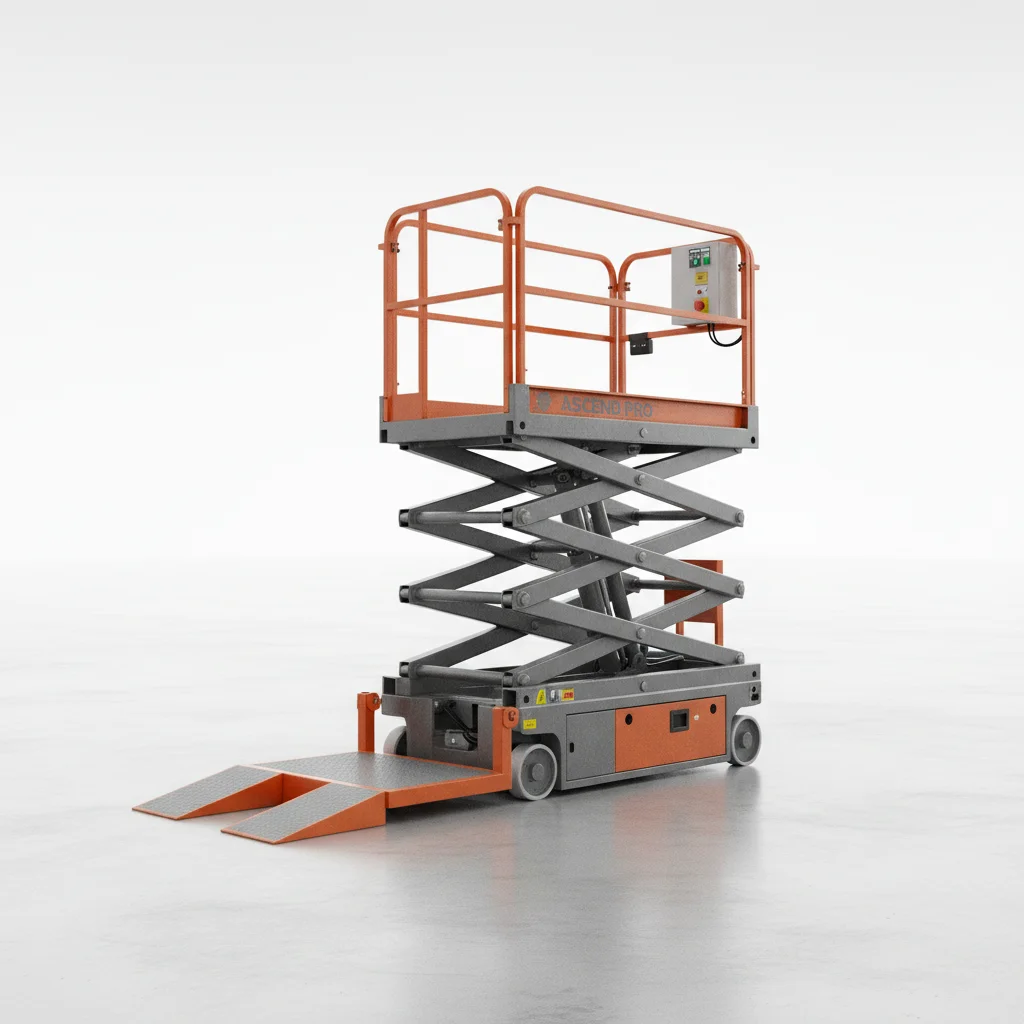
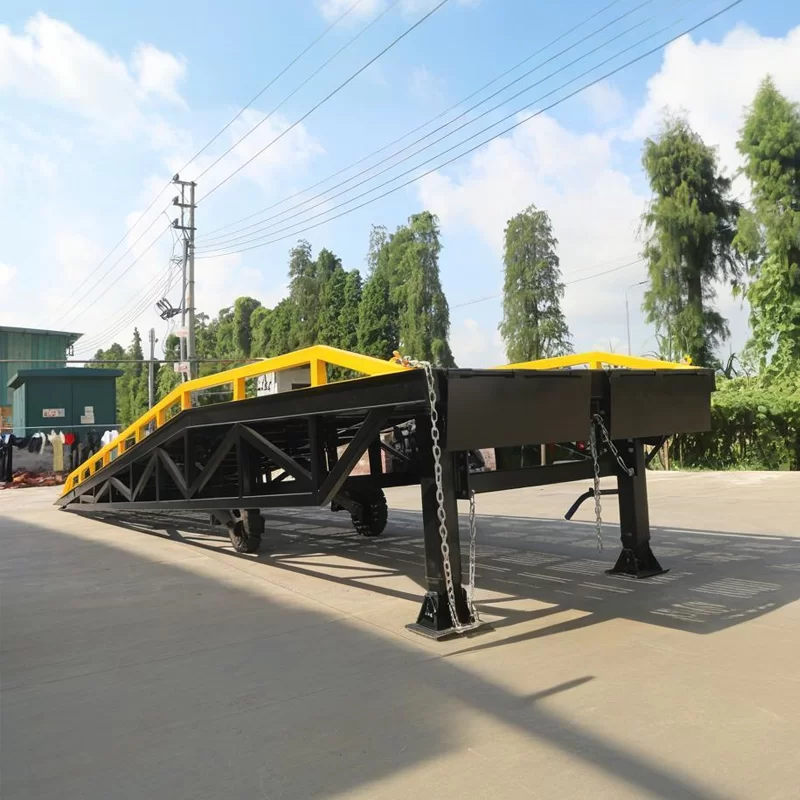
Container Loading Platform System Composition
The container loading platform mainly consists of the following four systems:
1. Mechanical Structure
The mechanical structure includes the main platform, front lip, base frame, and safety devices.
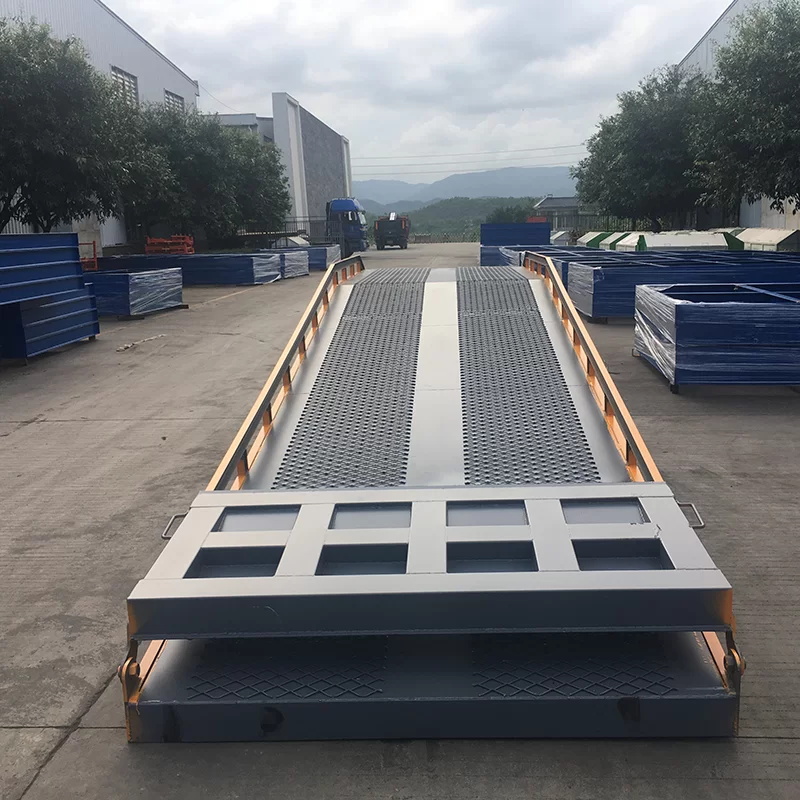
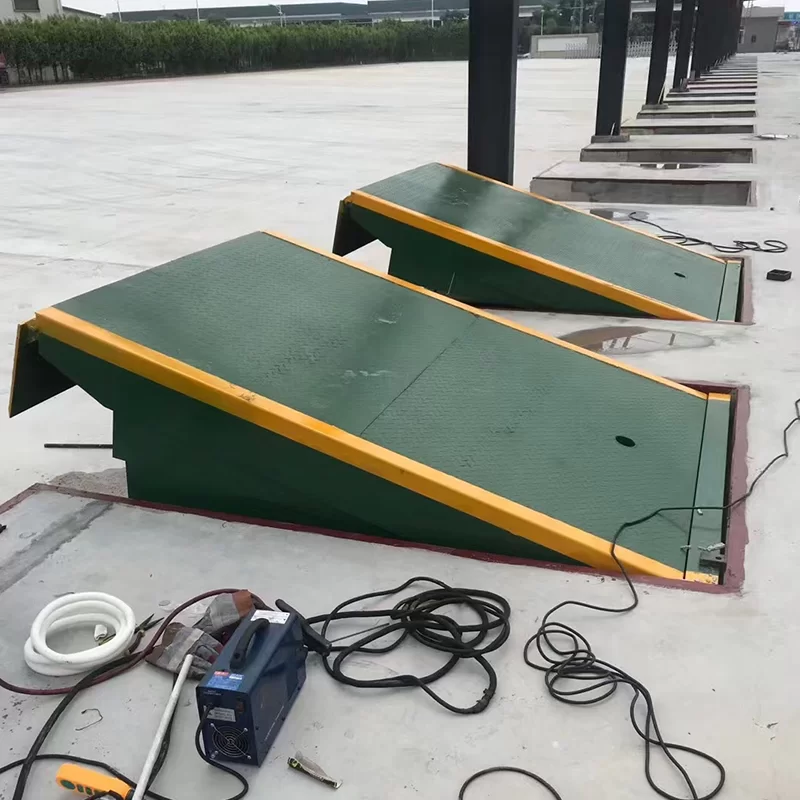
Main Platform: Manufactured from high-strength steel plates or non slip checkered plates, welded as a single unit for high load capacity. The surface is treated with anti corrosion coating, suitable for outdoor operating environments.
Front Lip: Located at the front end of the platform. It can be hydraulically or mechanically hinged to extend and rest on the container tail, forming a smooth transition. The lip tip features a curved or serrated design to enhance contact with the vehicle and prevent displacement.
Base Frame: Welded from rectangular tubes or I beams, fixed to the pit or ground to ensure overall rigidity.
2. Hydraulic System
The hydraulic system consists of an electric hydraulic pump station, lift cylinders, lip cylinders, and control valve groups.
Lift cylinders control the vertical adjustment of the main platform to match different container vehicle heights.
Lip cylinders independently control the extension and retraction of the front lip, ensuring close contact with the vehicle’s rear edge.
The system is equipped with anti burst valves, flow control valves, and overload protection to ensure smooth and safe operation.
3. Electrical System
The electrical system includes the control box, operation panel, limit switches, and safety interlocks.
Operation can be performed via push button control or remote control, with a safe low control voltage (typically ≤24V).
Limit switches are installed at the upper and lower travel limits of the platform and at the lip extension position, automatically controlling the travel range.
Optional features such as vehicle restraint devices, warning lights, and voice prompts can be added.
4. Safety and Auxiliary Devices
Fall Protection: A mechanical or hydraulic safety catch is installed at the front of the platform to prevent the platform from dropping if the vehicle unexpectedly moves away.
Anti Slip and Anti Impact Design: The platform surface uses high friction checkered plate, with reflective warning strips or impact absorbing rubber bumpers on the edges.
Emergency Lowering: In the event of a power failure or hydraulic system malfunction, the platform can be safely lowered by manually operating the release valve.
Container Loading Platform Main Features and Performance Advantages
Efficient Docking, Increased Throughput: The platform’s lifting range is typically +300 mm to –300 mm (expandable depending on the model), allowing quick matching of various container trucks and vans. Waiting time is reduced, and loading/unloading efficiency can be increased by more than 50%.
High Load Capacity: Rated loads range from 6 tons to 15 tons, with heavy duty models available up to 20 tons, accommodating forklifts, pallet trucks, and bulk cargo.
Smooth Operation and Safety: The hydraulic system uses synchronized dual cylinders to ensure stable lifting without impact. The front lip fits securely against the vehicle, eliminating safety hazards caused by vehicle movement during loading/unloading.
Durable Construction for Harsh Environments: Key components are made of high strength steel with corrosion resistant coatings. The hydraulic system is equipped with dust and water resistant features, making it suitable for outdoor, dusty, or humid conditions.
Simple Operation and Easy Maintenance: A single operator can perform vehicle alignment and platform control. The hydraulic pump station is modular, and routine maintenance is limited to checking hydraulic oil levels and lubricating pivot points.
Container Loading Platform Application Scenarios
Logistics Parks and Freight Terminals: Facilitates rapid loading/unloading between container trucks and warehouses, reducing vehicle waiting time.
Manufacturing Plants: Used for raw material receiving and finished product shipping, adapting to various truck bed heights.
Cold Chain Logistics: Meets the time sensitivity and sealing requirements of refrigerated container operations.
Cross Border E commerce Warehouses: Supports high frequency, small batch cargo flow, improving warehouse turnover efficiency.
- Summary
As a core piece of equipment in modern logistics loading/unloading operations, the container loading platform offers efficient docking, high load capacity, and reliable safety. It effectively solves the height difference problem between warehouses and transport vehicles. Whether in high throughput logistics centers or manufacturing facilities with strict operational efficiency requirements, this equipment significantly improves loading/unloading efficiency while reducing operating costs, making it an ideal choice for building modern logistics systems.
-
Request a Quote for Hydraulic Logistics Equipment
Tell us your requirements and get a fast, customized solution for lift tables, dock levelers, and other hydraulic logistics equipment.