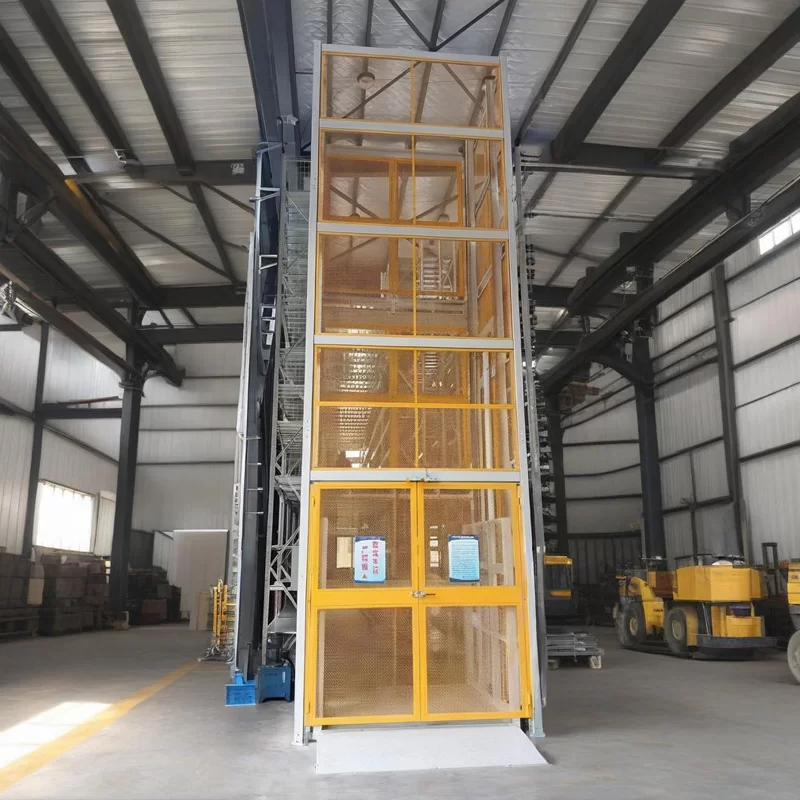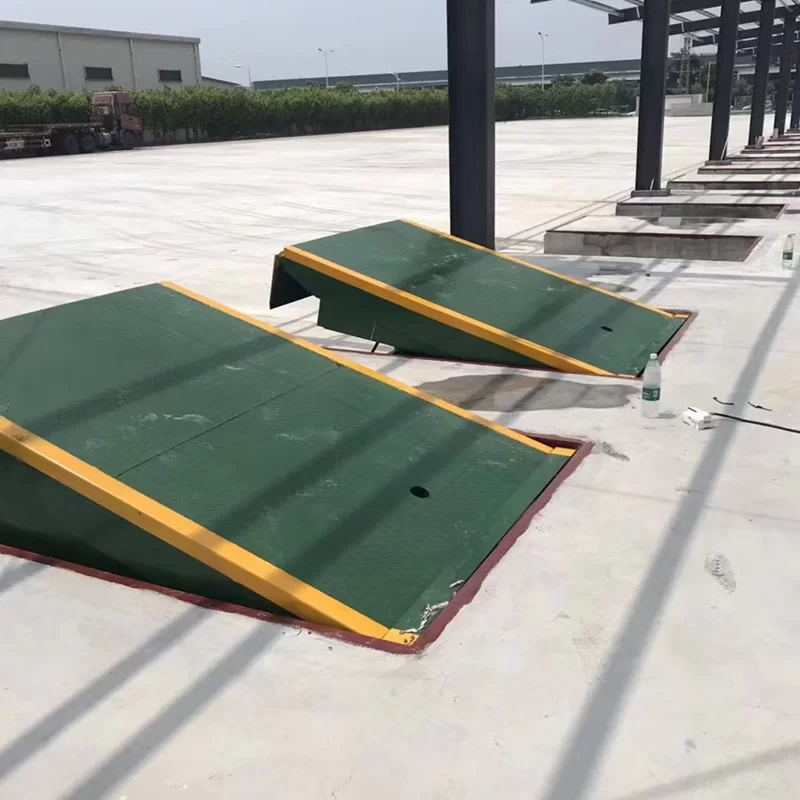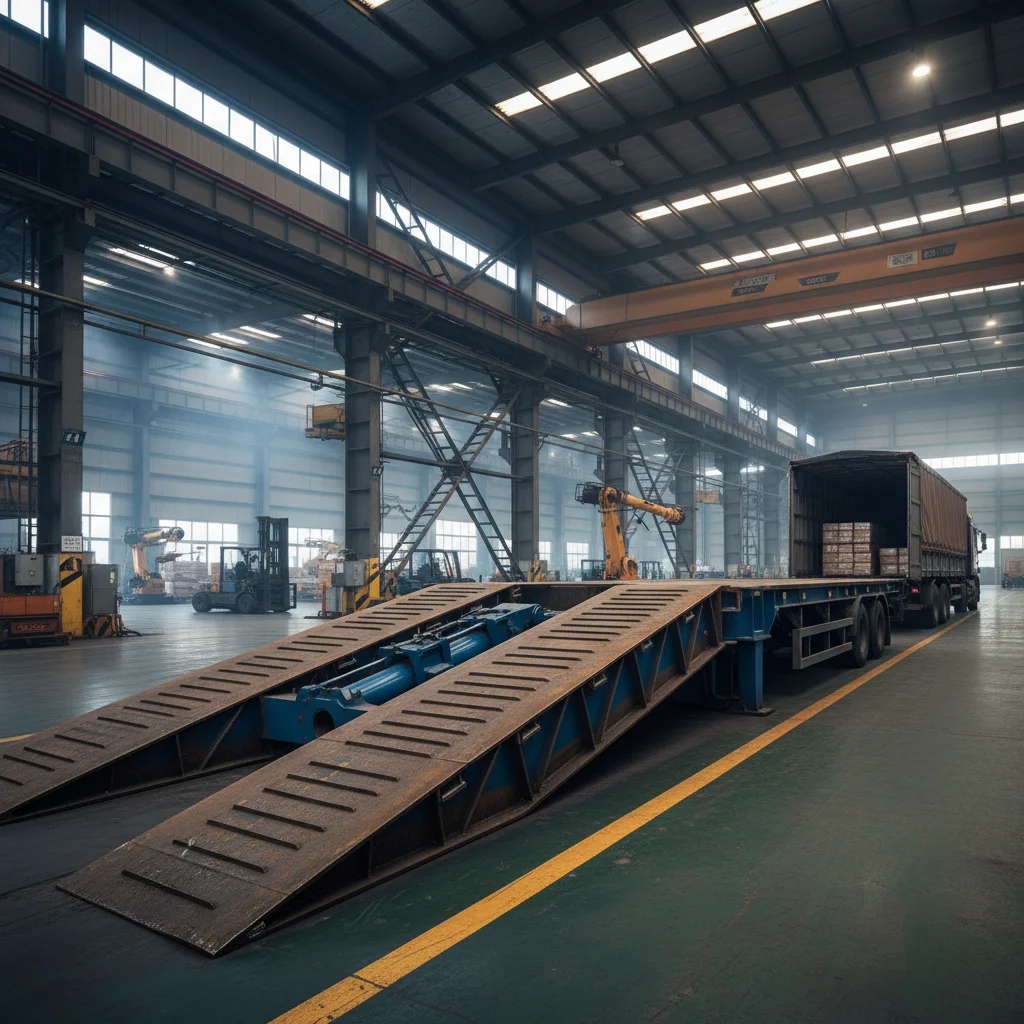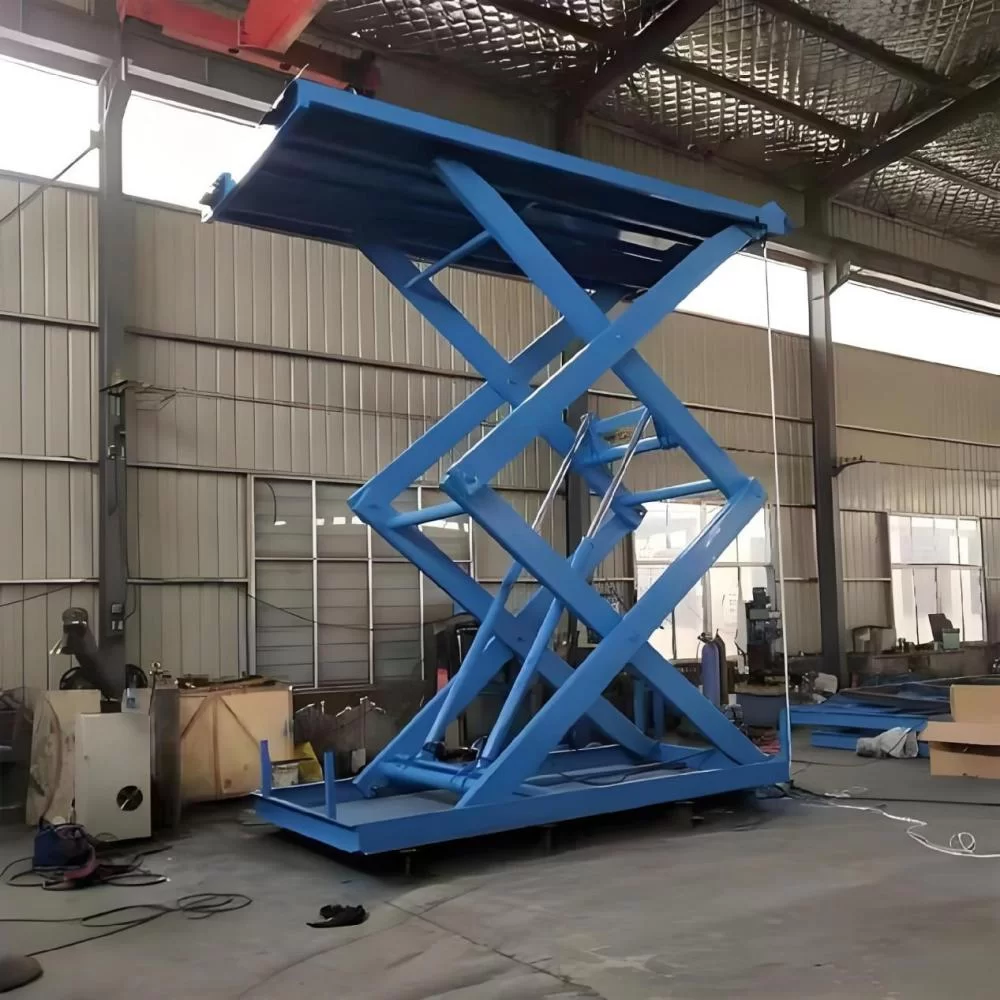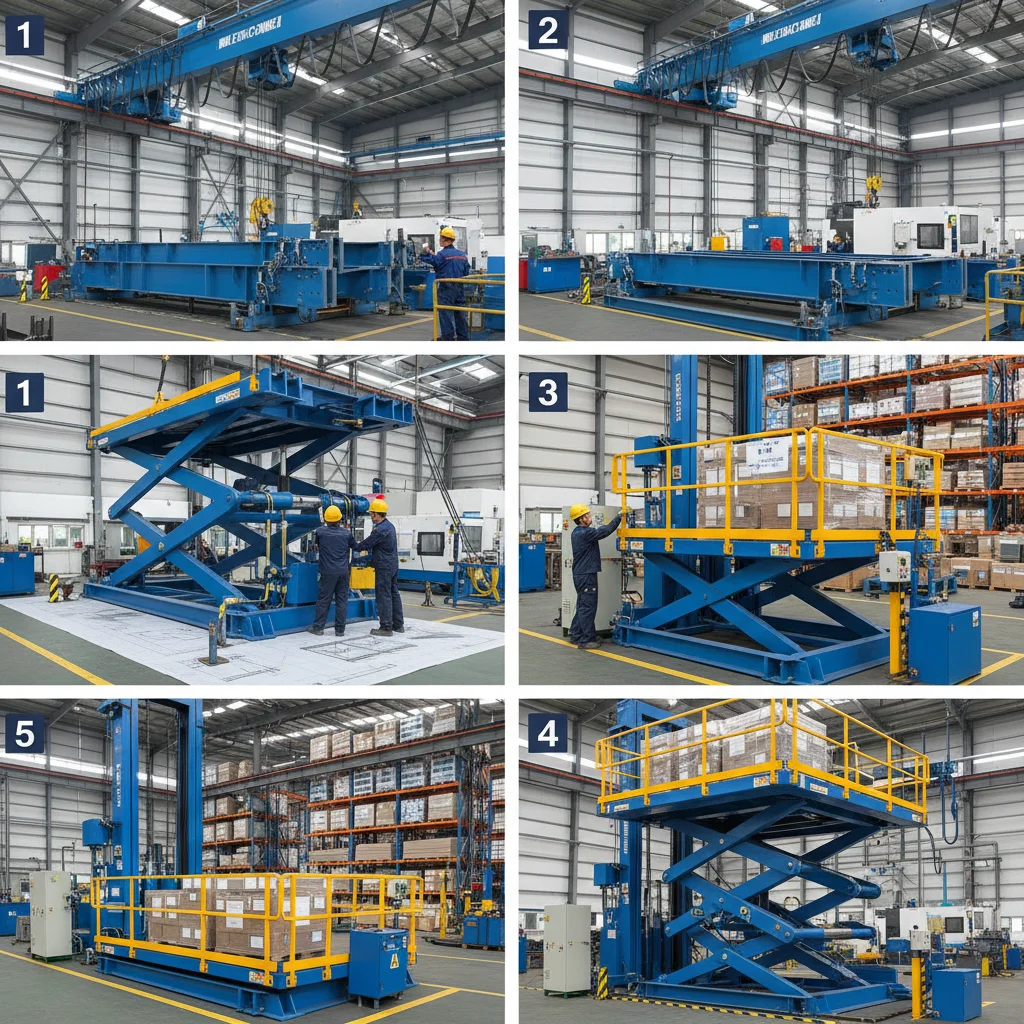
Hydraulic Dock Leveler System Composition
The hydraulic dock leveler consists of three main systems:
1. Mechanical Structure
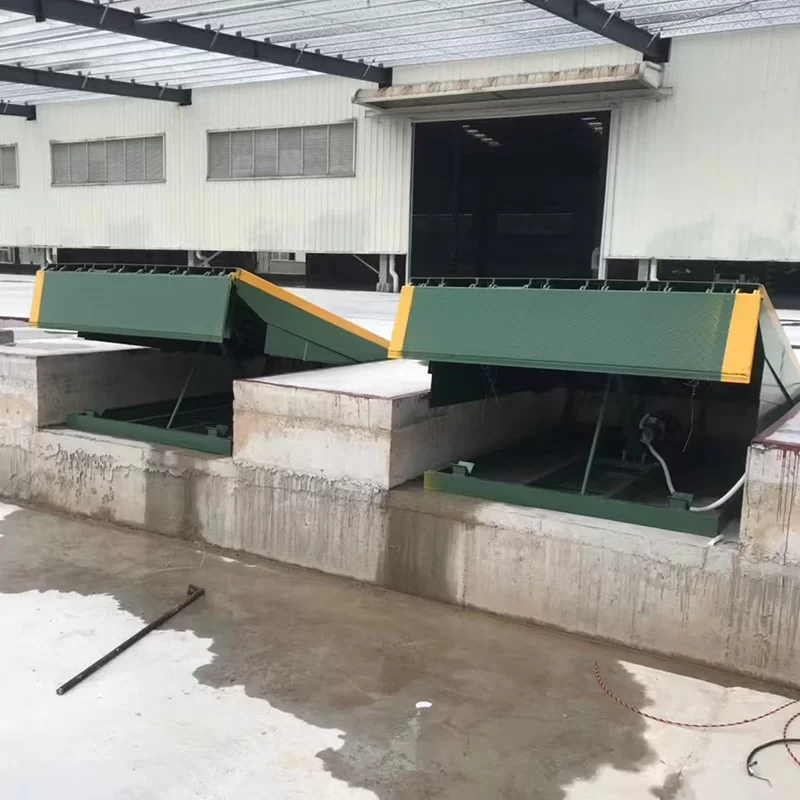
The mechanical structure includes the main platform, lip, subframe, and safety components.
Main Platform: Constructed from high-strength steel plate with a non-slip checkered or serrated surface, providing a durable and secure operating surface. The platform features a reinforced structural design to withstand heavy impact and dynamic loads.
Lip: The extension plate at the front of the platform, hinged to the main deck. It deploys to rest safely on the truck bed, creating a smooth transition between the dock and the vehicle.
Subframe: A welded steel frame that supports the main platform and houses the hydraulic cylinder and control components. It is designed for flush mounting into the dock pit.
Safety Components: Includes full-width safety treads, maintenance struts (mechanical or hydraulic) that lock the platform in a raised position during service, and impact-resistant bumpers.
2. Hydraulic System
The hydraulic system consists of a power unit, hydraulic cylinder, and control valves.
A self-contained electric hydraulic power unit drives a single or dual hydraulic cylinder to raise and lower the main platform.
Lip extension and retraction are controlled either by hydraulic action or gravity-assisted spring mechanisms, depending on the configuration.
The system integrates flow control valves to ensure smooth platform movement and prevent sudden descent.
3. Control System
The control system provides safe and intuitive operation.
Control is typically via a push-button station or a pull-cord mechanism mounted at the dock face, allowing the operator to activate the leveler from a safe position.
Emergency stop functions and visual indicators (such as LED lights showing lip status) are commonly included.
Optional remote controls or integrated dock management systems can be added for advanced functionality.
Hydraulic Dock Leveler Key Features and Performance Advantages
High Load Capacity: Rated for dynamic load capacities typically ranging from 6,000 kg to 15,000 kg, with static load ratings significantly higher, ensuring reliable performance under heavy forklift traffic.
Smooth Hydraulic Operation: Hydraulic actuation provides controlled, gradual platform movement and precise lip positioning, minimizing shock loads on both the dock leveler and the vehicle.
Enhanced Safety Features:
Maintenance Strut: A full-width steel strut (either mechanical or hydraulic) locks the platform securely in the raised position for safe inspection and service.
Full-Range Toe Guards: Protects operator feet from being caught under the platform during movement.
Non-Slip Surface: The serrated steel deck and lip provide exceptional traction in wet or oily conditions, reducing slip hazards.
Safety Treads: Brightly colored or reflective treads on the leading edge improve visibility and alert operators to the platform edge.
Durable Construction: Built from heavy-gauge steel with corrosion-resistant paint finishes. All pivot points feature grease fittings and hardened steel pins to extend service life under frequent use.
Versatile Compatibility: Accommodates a wide range of truck bed heights, typically from 200 mm below dock level to 400 mm above dock level, with optional extended lip configurations for special vehicles.
Quick Operation: Hydraulic models offer fast cycle times, typically completing a full raise–lip deploy–lower cycle in under 30 seconds, minimizing truck turnaround time.
Hydraulic Dock Leveler Application Scenarios
Distribution Centers: High-frequency loading and unloading of semi-trailers and box trucks.
Manufacturing Facilities: Efficient movement of raw materials and finished goods between production lines and shipping docks.
Cold Storage Warehouses: Specially designed levelers with insulated pits and cold-weather hydraulic fluids for low-temperature environments.
Retail & E-commerce Fulfillment: Supporting high-volume parcel handling and fast turnaround shipping operations.
- Summary
The hydraulic dock leveler combines robust construction, smooth hydraulic actuation, and comprehensive safety features to deliver a reliable and efficient loading dock solution. By reducing loading/unloading cycle times, minimizing vehicle and dock damage, and enhancing operator safety, it plays a critical role in optimizing logistics operations across industrial and commercial facilities.
-
Request a Quote for Hydraulic Logistics Equipment
Tell us your requirements and get a fast, customized solution for lift tables, dock levelers, and other hydraulic logistics equipment.