Hydraulic Mobile Dock Ramp Product Structure
The mobile dock ramp mainly consists of the following components:
1. Main Platform and Lip
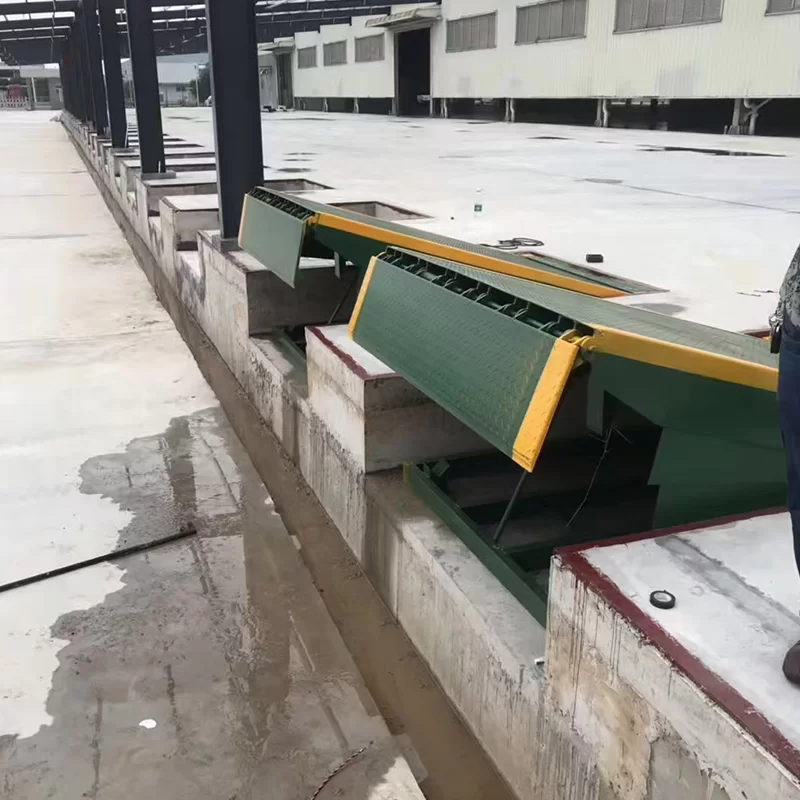
Main Platform: Constructed from high-strength anti-slip checkered steel plate. The surface is treated for slip resistance, ensuring stability and traction for forklifts during operation.
Front Lip: A hinged lip at the front end that connects with the truck bed to form a smooth transition. The lip is made of wear-resistant steel to withstand frequent impact during loading and unloading.
2. Hydraulic System
Equipped with a manual hydraulic pump or electric hydraulic pump, operated via a handle or button to raise and lower the platform.
Integrated check valve and overload protection ensure the platform remains stable under load and prevent accidental descent.
3. Mobility Mechanism
Features heavy-duty pneumatic or solid rubber tires for excellent load capacity and maneuverability.
A tow bar at the front allows short-distance towing by forklift or manual effort, enabling easy relocation between different loading points.
4. Safety Features
Anti-Slip Deck: The platform surface uses checkered plate or grating to prevent forklift wheels from slipping.
Safety Guards / Bumpers: Guide guards or rubber bumpers are provided on both sides of the lip to help position the ramp and prevent forklift misalignment.
Stabilizing Mechanism: Once positioned, the ramp is secured with outriggers or anti-slip pads to prevent movement during operation.
Safety Chains: Used to connect the ramp to the truck chassis or rear bumper, preventing accidental separation between the ramp and the truck.
Hydraulic Mobile Dock Ramp Main Features and Performance Advantages
Rated Load Capacity:
Typically covers 6 tons to 15 tons, meeting the loading and unloading requirements of standard forklifts and pallet trucks. Custom capacities are available for special models.
Wide Height Adjustment Range:
Hydraulic height adjustment typically covers -300 mm to +400 mm, accommodating various height differences between truck beds and ground surfaces.
Easy Operation:
A single operator can tow, position, and raise/lower the ramp. Manual hydraulic pumps require minimal effort, while electric pump models offer one button operation for increased efficiency.
Flexible Mobility:
The mobile design requires no fixed foundation and does not occupy permanent space. The ramp can be quickly moved between different warehouses, docks, or temporary loading points, maximizing equipment utilization.
Robust and Durable Construction:
Main beams and critical load-bearing components are fabricated from high strength steel. The surface is treated with anti corrosion coating to withstand outdoor all weather operation, ensuring long service life.
High Safety Standards:
The hydraulic system includes burst valves to prevent sudden platform descent in case of hose failure.
During operation, mechanical outriggers or anti skid pads provide stable ground support to prevent movement.
Safety chains secure the connection between the ramp and the truck during loading and unloading.
Hydraulic Mobile Dock Ramp Application Scenarios
Logistics Parks & Distribution Centers: Quickly establishes loading channels in areas without fixed docks, improving truck turnaround efficiency.
Factory Warehouses: Adapts to trucks of varying heights, compensating for insufficient dock heights or diverse vehicle fleets.
Agriculture & Cold Chain: Suitable for agricultural collection points and cold storage loading areas, enabling forklift access to refrigerated trucks.
Temporary Loading Sites: Provides fast loading/unloading solutions for exhibitions, construction sites, temporary storage, and similar locations.
Hydraulic Mobile Dock Ramp Operation Process
Towing: Move the ramp to the work location using the tow bar.
Positioning: Align the front lip with the rear of the truck and adjust the ramp angle as needed.
Raising/Lowering: Operate the hydraulic pump to raise the platform and place the lip onto the truck bed.
Securing: Attach the safety chains and ensure outriggers or anti-slip pads are firmly in contact.
Loading/Unloading: Forklifts safely drive across the ramp into the truck to perform loading or unloading.
Completion: Retract the lip, lower the platform, release safety connections, and move the ramp to the storage area.
Hydraulic Mobile Dock Ramp Maintenance
Regularly check hydraulic oil level and hose connections for leaks.
Keep the platform surface clean; remove oil, mud, and debris promptly.
Regularly inspect tire pressure (for pneumatic tires) and bearing condition to ensure smooth mobility.
Lubricate hinge points and rotating parts regularly to maintain smooth operation.
When not in use for extended periods, store the ramp in a dry, ventilated area to avoid accelerated corrosion from rain exposure.
- Summary
With its flexibility, ease of operation, and reliable load capacity, the mobile dock ramp has become an indispensable auxiliary device for loading and unloading operations. Whether in warehousing centers lacking fixed docks or in variable temporary work sites, this product effectively shortens loading times, reduces manual labor intensity, and enhances overall logistics efficiency. For businesses seeking an efficient, flexible, and low investment loading/unloading solution, the mobile dock ramp is an ideal choice.
-
Request a Quote for Hydraulic Logistics Equipment
Tell us your requirements and get a fast, customized solution for lift tables, dock levelers, and other hydraulic logistics equipment.