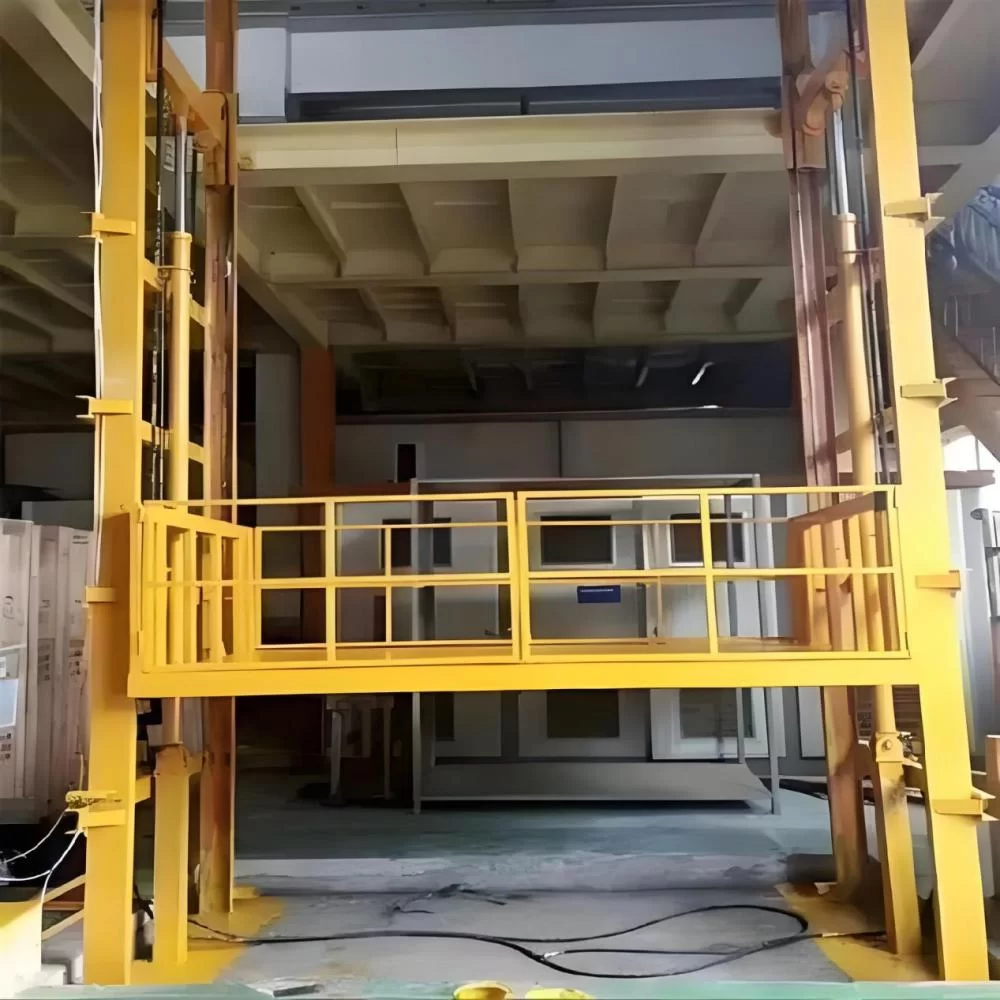
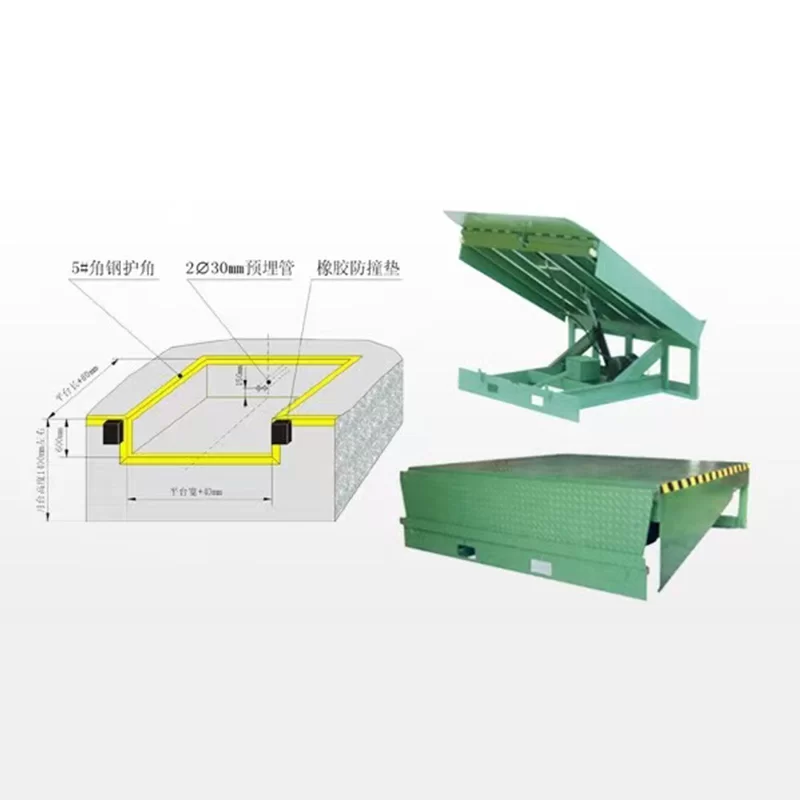
Warehouse Dock Ramp System Composition
A typical warehouse dock ramp consists of the following main components:
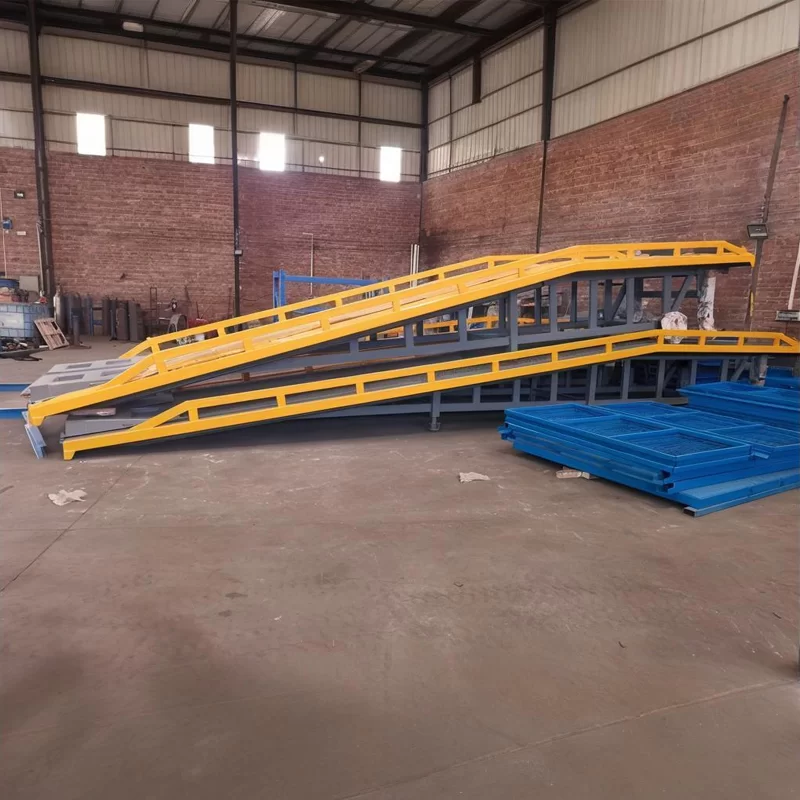
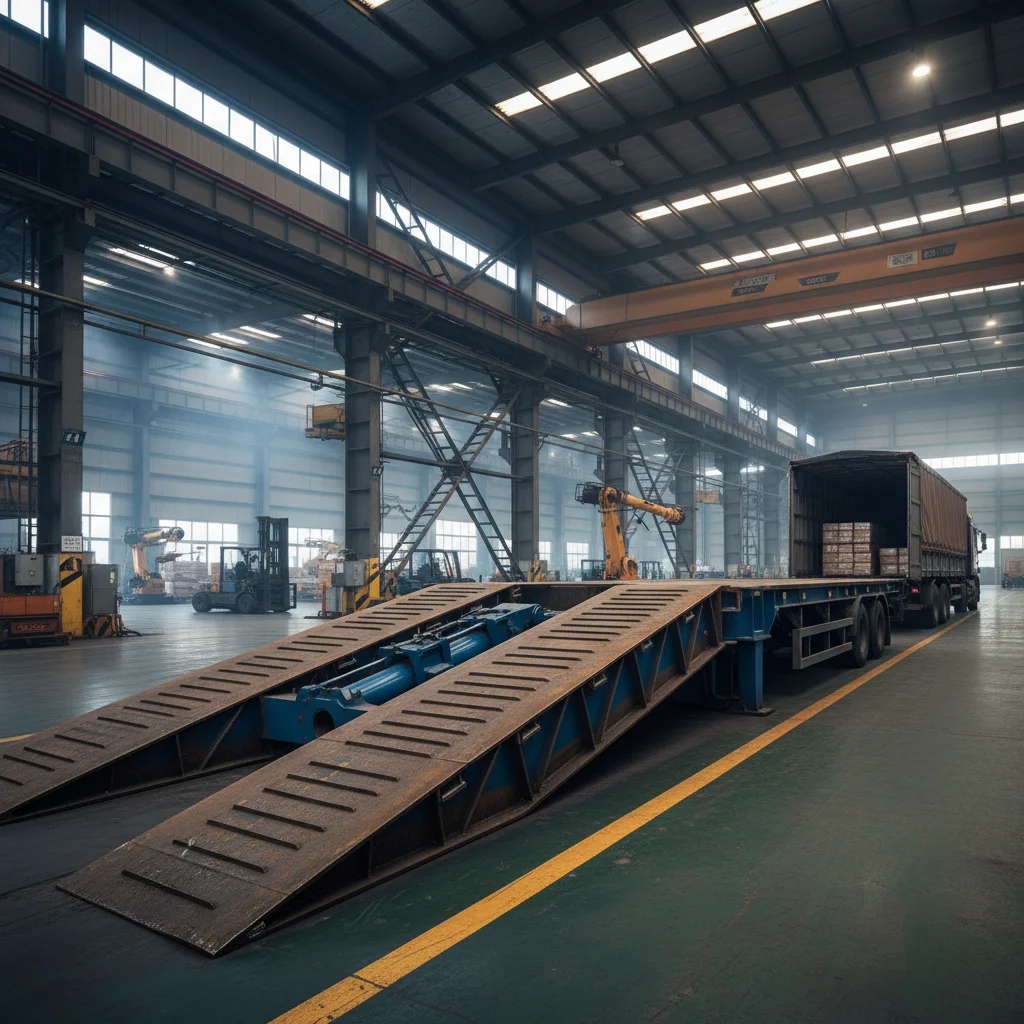
1. Main Deck Structure
The main deck is constructed from high-strength steel (typically ¼-inch or 6 mm checkered plate or diamond tread plate), providing a durable, non-slip surface capable of withstanding heavy loads and continuous impact. The deck width typically ranges from 1.5 m to 2.2 m, with lengths from 1.5 m to 3.5 m to suit various dock heights and truck bed levels.
2. Lip (Extension Plate)
The lip is a hinged extension at the front of the deck that extends outward to rest securely on the truck bed. Depending on the model, the lip can be activated hydraulically, mechanically (via pull chain or spring assist), or manually. The lip ensures a smooth transition for forklifts and pallet jacks, preventing wheel drop and load instability.
3. Hinge System
Heavy-duty hinges connect the lip to the main deck, engineered to withstand repeated articulation under full load. Hinge pins are heat-treated and greaseable to ensure long service life and smooth operation.
4. Hydraulic or Mechanical Operating System
Hydraulic Models: Utilize an electric hydraulic pump unit to raise the deck and extend the lip. The operator uses a push-button or remote control to operate the ramp, providing effortless, one-touch activation.
Mechanical Models: Operate via a spring-assisted counterbalance system. The operator pulls a release chain or handle to raise the deck, walks it into position, and the lip drops into place. Mechanical models are reliable and do not require electrical power.
Manual (Mobile) Models: Portable ramps feature a manual pump or self-adjusting design, ideal for facilities without fixed docks or with multiple loading points.
5. Safety Systems
Safety features are integrated to protect both personnel and equipment:
Safety Legs (Hold-Down Devices): Prevent the ramp from dropping below dock level if a truck pulls away unexpectedly.
Toe Guards: Protect operator’s feet from being caught under the deck.
Full-Range Maintenance Supports: Provide positive lock-out during service and maintenance.
Non-Slip Surface: The deck and lip feature high-traction tread patterns to maintain grip in wet or oily conditions.
Warehouse Dock Ramp Key Features and Performance Advantages
High Load Capacity: Standard dock ramps are rated for dynamic loads ranging from 6,000 kg to 15,000 kg, with heavy-duty models available for up to 20,000 kg or more, accommodating forklifts, pallet jacks, and other material handling equipment.
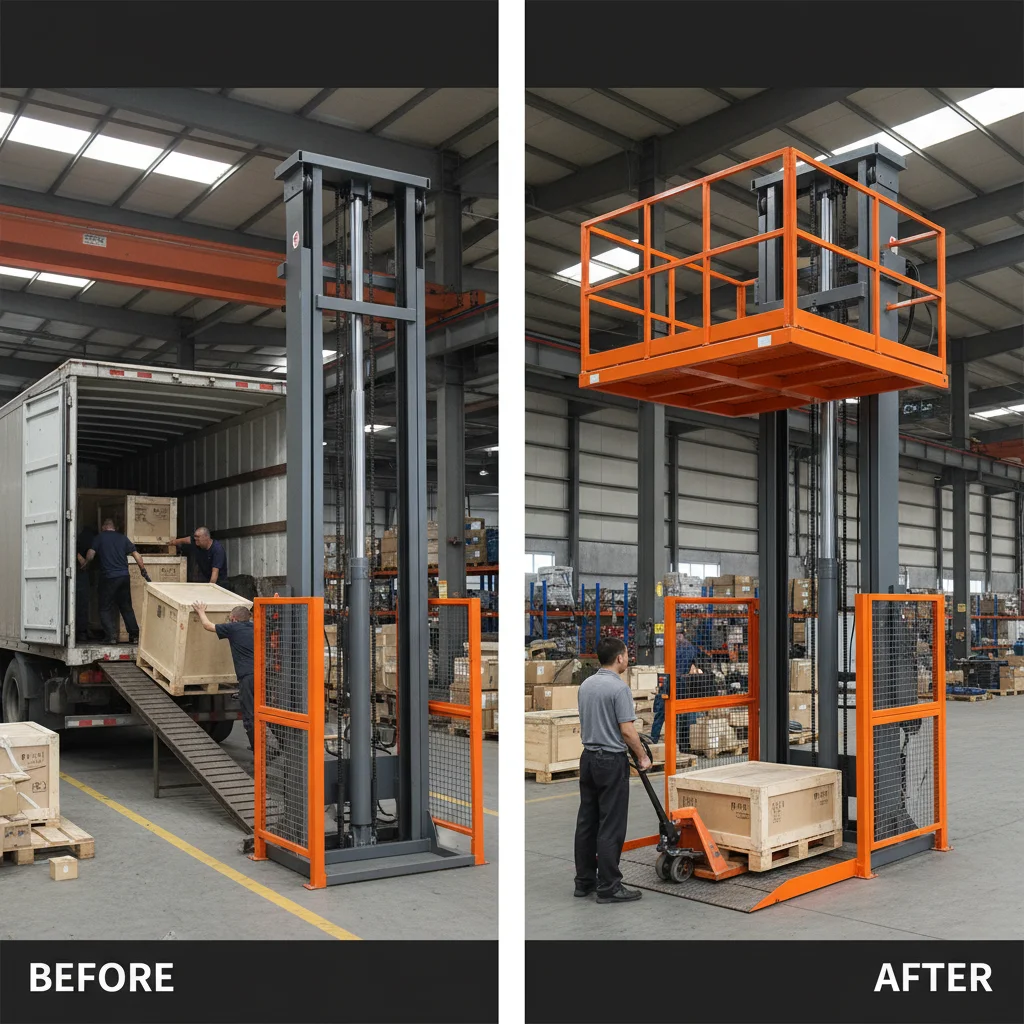
Efficient Loading & Unloading: By providing a smooth, level transition from dock to vehicle, the ramp eliminates the need for forklifts to navigate sloped surfaces, reducing cycle times and minimizing product damage.
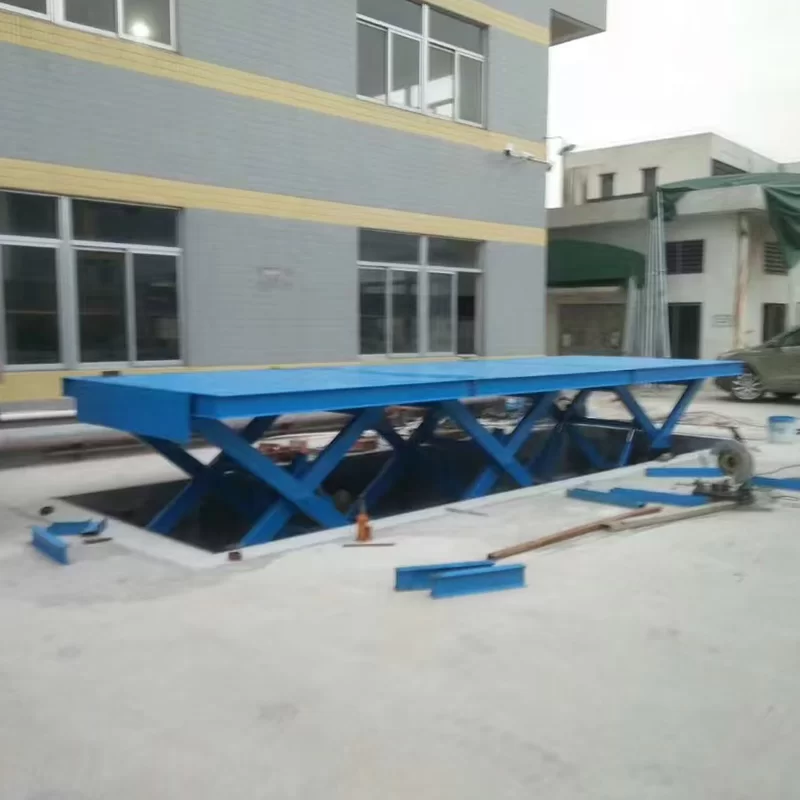
Versatile Applications: Available in pit-mounted (recessed), edge-of-dock (surface-mounted), and portable configurations. Pit-mounted ramps offer a flush surface with the dock floor when not in use, maximizing space efficiency.
Weather and Corrosion Resistance: Options include galvanized finishes, stainless steel components, and sealed bearings for facilities exposed to outdoor environments, cold storage, or corrosive conditions.
Ergonomic Operation: Hydraulic models feature user-friendly push-button or remote operation, reducing physical strain on operators and improving safety. Mechanical models offer simple, reliable operation without dependence on power supply.
Durability and Long Service Life: Constructed with heavy-gauge steel, wear-resistant pivot pins, and sealed lubrication points, dock ramps are built for decades of heavy-duty, high-cycle use.
Warehouse Dock Ramp Application Scenarios
Warehouses & Distribution Centers: High-volume loading bays requiring fast turnaround times.
Manufacturing Plants: Receiving raw materials and shipping finished goods.
Retail & Grocery Distribution: Maintaining product integrity with smooth transitions for palletized and loose loads.
Cold Storage Facilities: Ramps designed with low-temperature seals and corrosion-resistant coatings to withstand harsh freezer environments.
Facilities without Fixed Docks: Mobile ramps provide flexible loading solutions where permanent docks are not available.
- Summary
The warehouse dock ramp is an essential investment for any facility handling frequent loading and unloading operations. By combining robust construction, flexible operating options, and comprehensive safety features, it delivers a reliable and efficient solution for bridging the gap between dock and vehicle. Whether selecting a hydraulic model for high-speed operations, a mechanical model for simplicity and reliability, or a portable ramp for multi-location flexibility, this equipment significantly improves productivity while ensuring a safer working environment.
-
Request a Quote for Hydraulic Logistics Equipment
Tell us your requirements and get a fast, customized solution for lift tables, dock levelers, and other hydraulic logistics equipment.