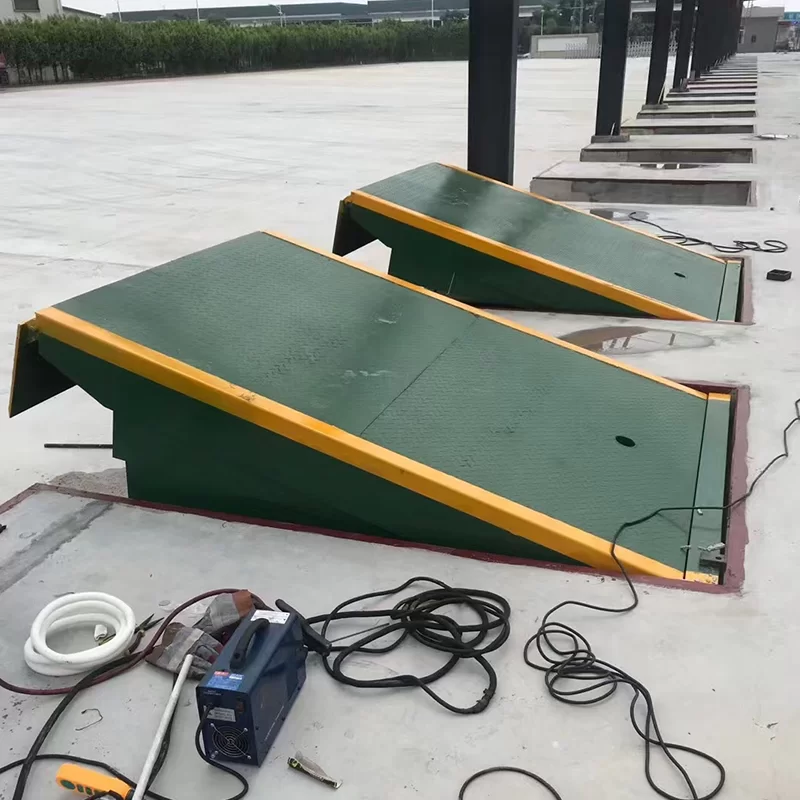
Warehouse Dock Leveler System Composition
The warehouse dock leveler mainly consists of the following components:
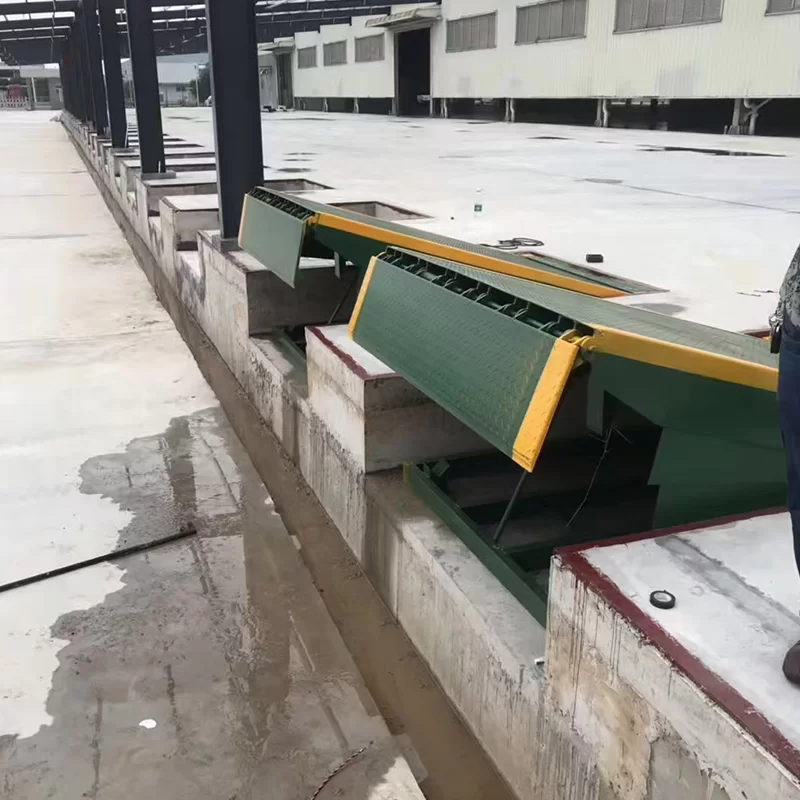
1. Main Platform and Lip
Main Platform: Constructed from high-strength anti-slip steel plate, with a surface treated by hot-dip galvanizing or anti-corrosion coating, offering excellent wear and corrosion resistance to withstand frequent forklift traffic.
Lip: Located at the front edge of the platform, the lip can be folded upward or extended downward to rest on the floor of the truck trailer, bridging the gap between the dock and the vehicle to ensure smooth forklift transition.
2. Drive and Lifting Mechanism
Hydraulic Type: Comprises an electric hydraulic pump station, cylinders, and control valve group. The platform lift and lip extension are controlled via a push button or remote control, offering easy operation and smooth motion. An anti-burst hydraulic lock is included to prevent accidental descent.
Mechanical Spring Type: Uses a balanced spring mechanism for platform lift, released via a manual pull rod. Suitable for applications with lower frequency and limited budgets.
3. Safety Devices
Anti-Slip Surface: The platform and lip surfaces feature raised tread plate or mesh grating designs, providing reliable traction for tires and forklifts even in wet or oily conditions.
Safety Toe Guards / Side Skirts: Protective guards are installed on both sides of the platform to prevent forklift wheels from accidentally running off the edge.
Maintenance Support Bar: A mechanical support bar can be inserted during maintenance to prevent accidental platform descent, ensuring the safety of service personnel.
Impact Buffers: High-elastic rubber bumpers are installed at the dock edge to protect the building and vehicles from impact during truck docking.
4. Control Method
Standard control boxes are mounted on the dock wall, allowing operators to control the leveler from the forklift seat using a pendant cord or remote control without needing to repeatedly get on and off the vehicle.
Some models offer optional wireless remote control systems for enhanced convenience and safety.
Warehouse Dock Leveler Main Features and Performance Advantages
High Load Capacity: Rated dynamic load capacity typically ranges from 6,000 kg to 15,000 kg, with heavy-duty models reaching over 20,000 kg, accommodating various types of forklifts and material handling equipment.
Accommodates Multiple Vehicle Types: The leveler’s working range covers box trucks, container trucks, and flatbeds of varying heights. The lip provides sufficient overlap, with a maximum working range of ±300 mm in height difference.
Smooth and Reliable Operation: The hydraulic system utilizes precision control valve groups, ensuring smooth and shock-free platform lifting and lip extension, reducing impact loads on both the vehicle and the dock structure.
High-Strength Structure: The main platform is constructed from a one-piece steel plate with reinforced stress points, offering long service life and the ability to withstand high-frequency, high-intensity loading operations.
Easy Installation and Maintenance: The leveler is installed either recessed or ramp-mounted, integrating seamlessly with the dock without occupying additional space. Key components are modular, simplifying routine lubrication and maintenance and effectively reducing downtime.
Weather and Corrosion Resistance: Key components are galvanized or coated, and wide-temperature hydraulic oil is used to ensure stable operation in both freezing and high-temperature environments.
Warehouse Dock Leveler Application Scenarios
Standard Warehousing Docks: Daily loading and unloading operations in finished goods warehouses and raw material stores.
Cold Chain Logistics Centers: Hydraulic systems maintain stability in low-temperature environments, meeting the rapid loading and unloading requirements of frozen and refrigerated goods.
E-Commerce Distribution Centers: High-frequency, multi-vehicle operations that improve turnaround efficiency.
Manufacturing Plants: Raw material receiving and finished product shipping processes, ensuring smooth material flow.
Retail Distribution Centers: Time-sensitive operations such as supermarket distribution and fresh food logistics.
- Summary
The warehouse dock leveler is a key interface device connecting the loading dock and transport vehicles. By providing efficient, smooth, and safe bridging functionality, this equipment significantly reduces loading and unloading times, minimizes impact wear on forklifts and docks, and enhances overall operational efficiency and safety. Whether in large logistics centers or small to medium-sized warehouses, selecting the appropriate dock leveler provides a stable and reliable foundation for the material handling system.
-
Request a Quote for Hydraulic Logistics Equipment
Tell us your requirements and get a fast, customized solution for lift tables, dock levelers, and other hydraulic logistics equipment.