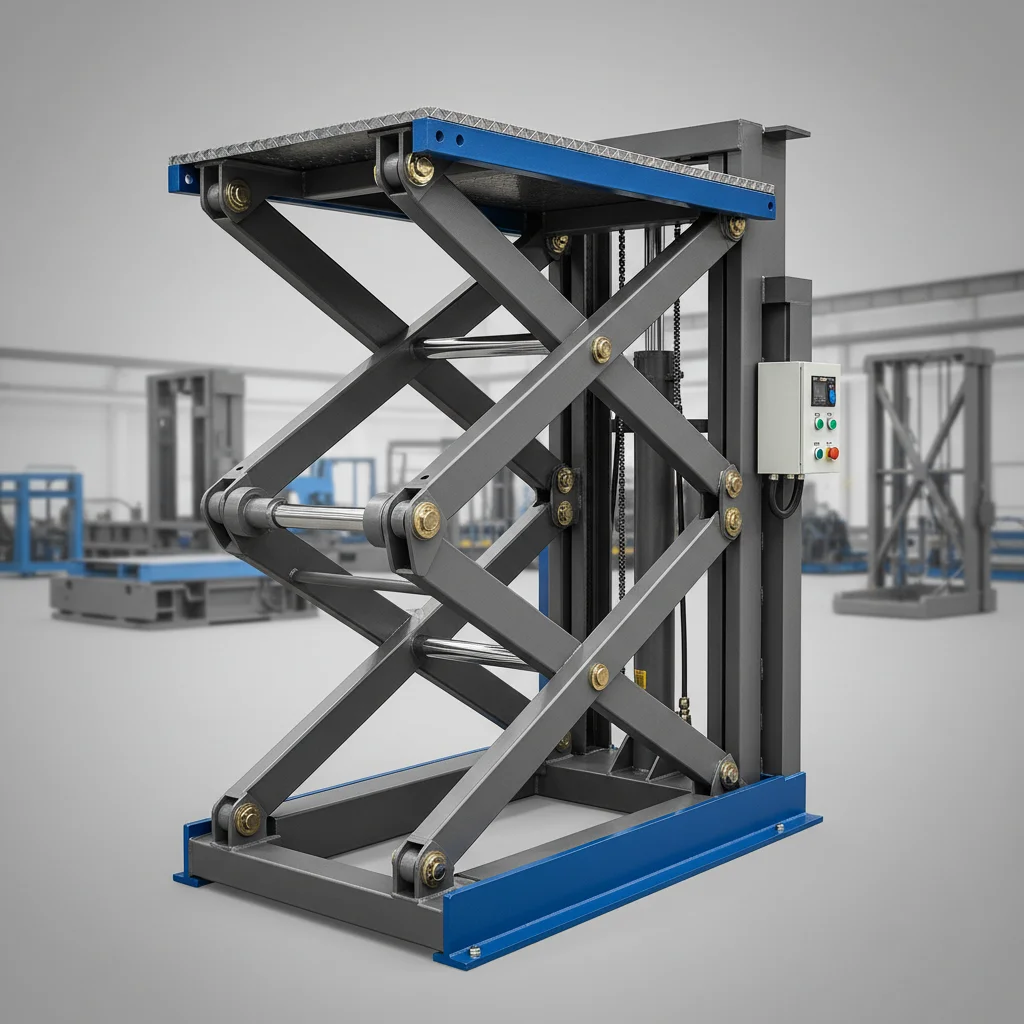
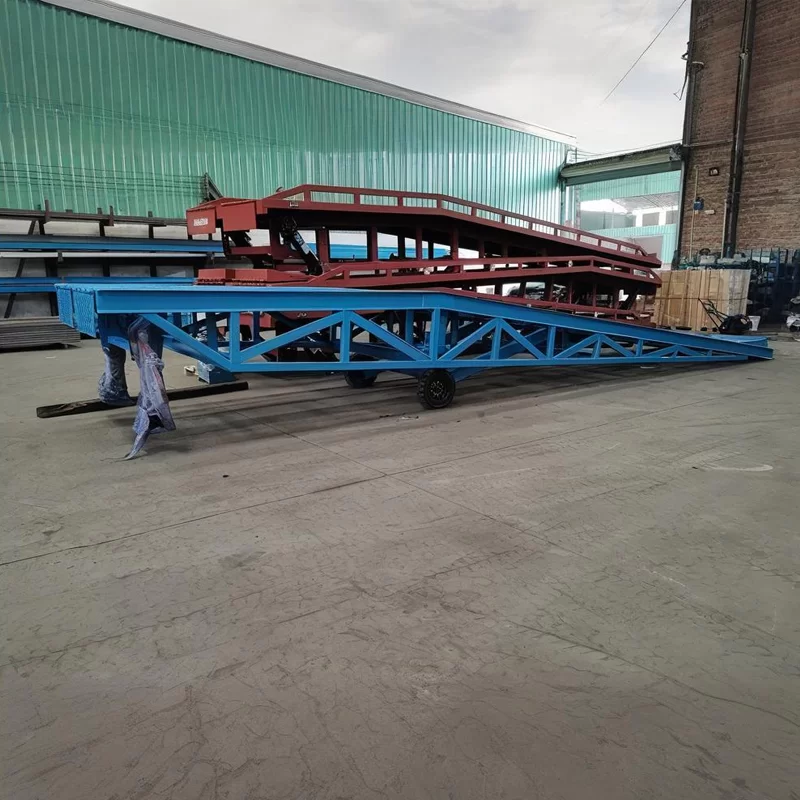
Manual Hydraulic Mobile Dock Ramp System Composition
The manual hydraulic mobile dock ramp consists of four main subsystems:
1. Mechanical Structure
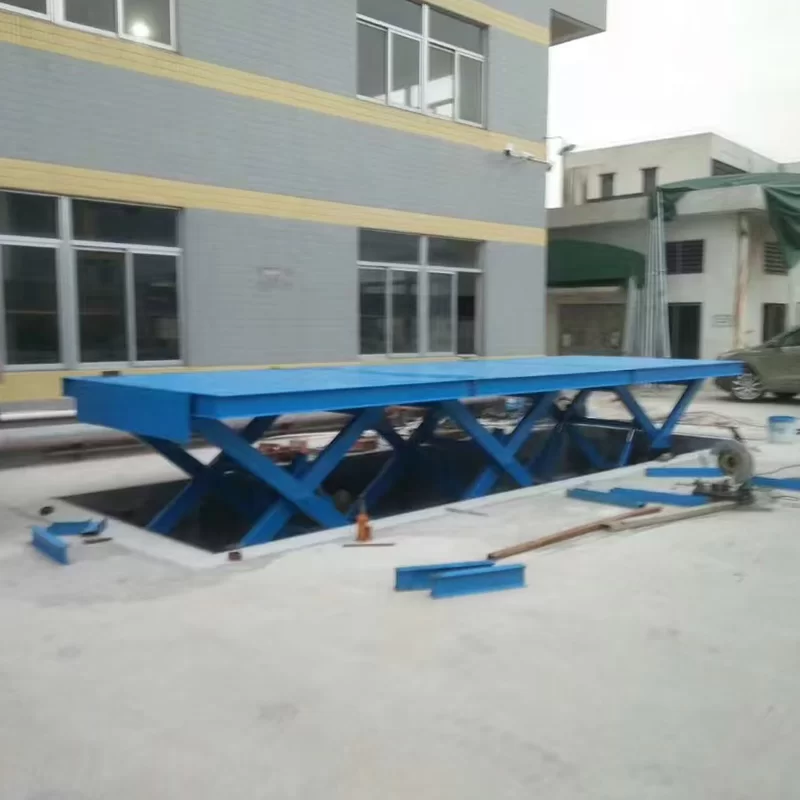
The mechanical structure includes the main deck, the hinged lip plate, the base frame, and the articulated support system.
Main Deck: Made of high-strength non slip checkered steel plate with a wear resistant surface, providing a stable load bearing area.
Hinged Lip Plate: A foldable lip plate at the front end smoothly engages with the truck bed, forming a seamless transition slope for forklifts or manual pallet trucks.
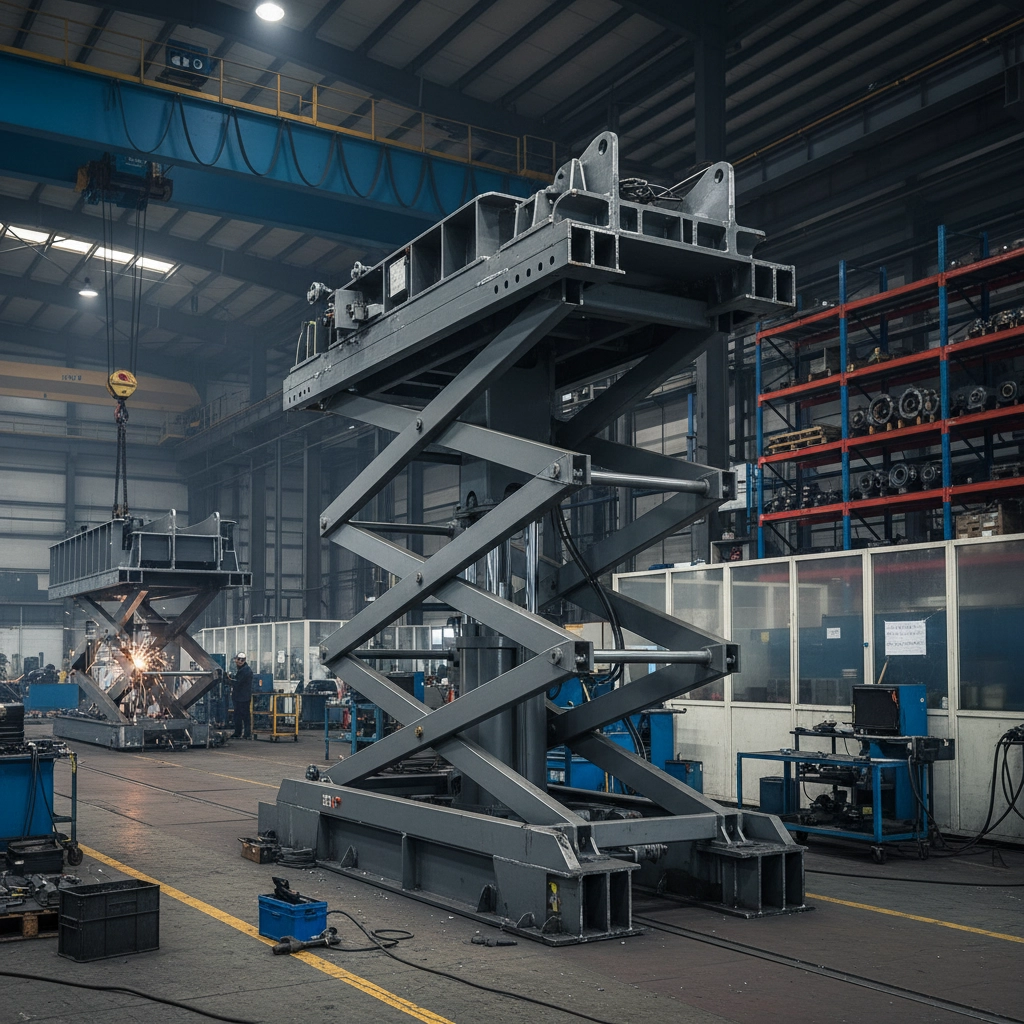
Base Frame: Welded from rectangular steel tubes, offering a rugged structure with high overall rigidity.
Articulated Support System: A multi link articulated mechanism enables lifting and lowering of the platform with compactness and smooth motion.
2. Hydraulic System
The hydraulic system consists of a manual hydraulic pump, hydraulic cylinder, release valve, and hoses.
Manual Hydraulic Pump: Two speed design provides rapid lifting under no load and high pressure boosting under load, ensuring efficient operation with reduced effort.
Hydraulic Cylinder: Integrated plunger cylinder with excellent sealing performance and built in cushioning to reduce impact at the end of the stroke.
Release Valve: Rotary type release valve allows controlled slow descent of the platform by manually releasing hydraulic pressure, preventing sudden drops and shocks.
3. Traveling and Steering System
The traveling system features heavy duty nylon or polyurethane casters, with swivel casters at the front and rigid casters (or casters with brakes) at the rear.
A tow handle is integrated into the ramp, allowing one person to easily push and position the unit.
Caster materials are wear resistant, quiet, and non marking, suitable for various floor types including epoxy and concrete.
4. Safety Devices
Safety Chains / Side Guards: The lip plate is equipped with safety chains or anti skid side guards to prevent accidental forklift run off during loading/unloading.
Non Slip Surface: The main deck and lip plate feature anti slip designs to maintain good traction even in rain, snow, or oily conditions.
Overload Protection: An integrated relief valve in the hydraulic system prevents lifting when overloaded, protecting equipment and operators.
Controlled Descent: The release valve includes a throttling function to adjust lowering speed, preventing sudden drops that could cause impact or instability.
Manual Hydraulic Mobile Dock Ramp Main Features and Performance Advantages
No Power Supply Required – Ready to Use Anywhere: Driven by a manual hydraulic pump, the ramp requires no external electricity or compressed air. Free from cables, it is highly mobile and ideal for locations without power access or for temporary loading operations.
High Load Capacity: Rated loads typically range from 1,000 kg to 3,000 kg, with heavy duty models available up to 5,000 kg, meeting the needs of forklifts, pallet trucks, and manual hydraulic carts.
Wide Height Adjustment Range: Platform height adjustment generally covers 300 mm to 800 mm, accommodating the loading heights of most light trucks, vans, and containers.
Easy Maneuvering and Flexible Relocation: Equipped with high quality casters and a foldable tow handle, the ramp can be moved by one person and quickly repositioned between different dock doors or workstations, reducing the need for multiple fixed ramps.
Simple Operation and Low Maintenance: The manual hydraulic pump has a straightforward design with low failure rates. Key pivot points use self lubricating bearings that require minimal greasing. Routine maintenance is limited to checking hydraulic oil levels and fastening bolts, resulting in very low upkeep costs.
Compact Design, Space Saving Storage: When not in use, the ramp can be pushed into a corner; some models support upright storage to further reduce footprint.
Manual Hydraulic Mobile Dock Ramp Application Scenarios
Logistics and Distribution Centers: Quick loading/unloading of vans and flatbed trucks, bridging the gap between docks and vehicles.
Factory Warehouses: Provides a temporary loading/unloading passage for forklifts in facilities without fixed loading docks.
Retail Stores: Accommodates delivery vehicles of varying heights at store receiving areas.
Cold Chain Logistics: The absence of electrical components makes it suitable for cold storage loading areas, eliminating electrical failure risks in low temperature environments.
Temporary Work Sites: Ideal for exhibitions, construction sites, and temporary storage areas where no fixed loading infrastructure exists.
- Summary
The manual hydraulic mobile dock ramp combines the core advantages of requiring no external power, offering flexible mobility, and providing reliable load capacity, making it a cost effective solution for bridging height differences at loading/unloading points. Its simple construction, intuitive operation, and easy maintenance make it especially suitable for applications with dispersed loading points, limited power availability, or the need to serve multiple stations. This equipment significantly improves loading efficiency, reduces physical labor, and serves as a practical auxiliary device in logistics, warehousing, and commercial distribution.
-
Request a Quote for Hydraulic Logistics Equipment
Tell us your requirements and get a fast, customized solution for lift tables, dock levelers, and other hydraulic logistics equipment.