Guide Rail Hydraulic Cargo Lift System Composition
The system is composed of three main components:
1. Mechanical Structure
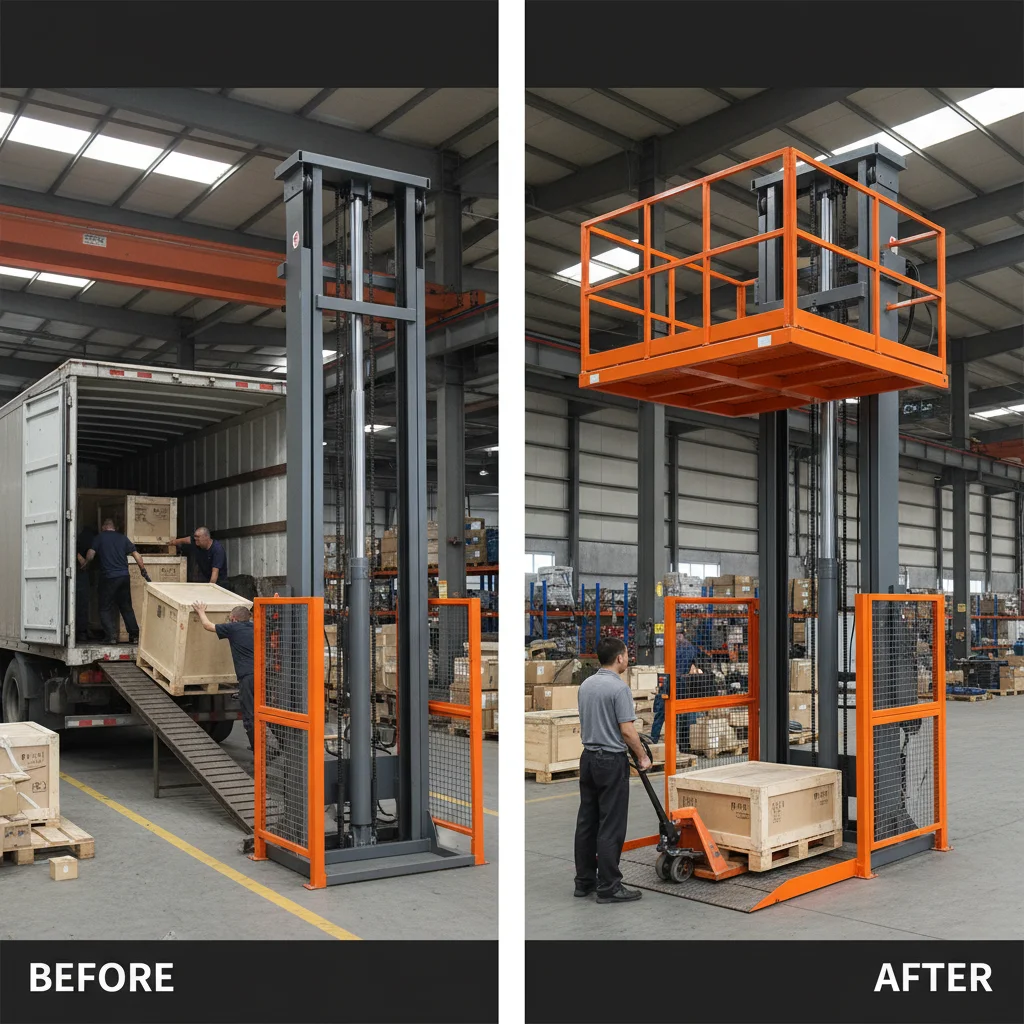
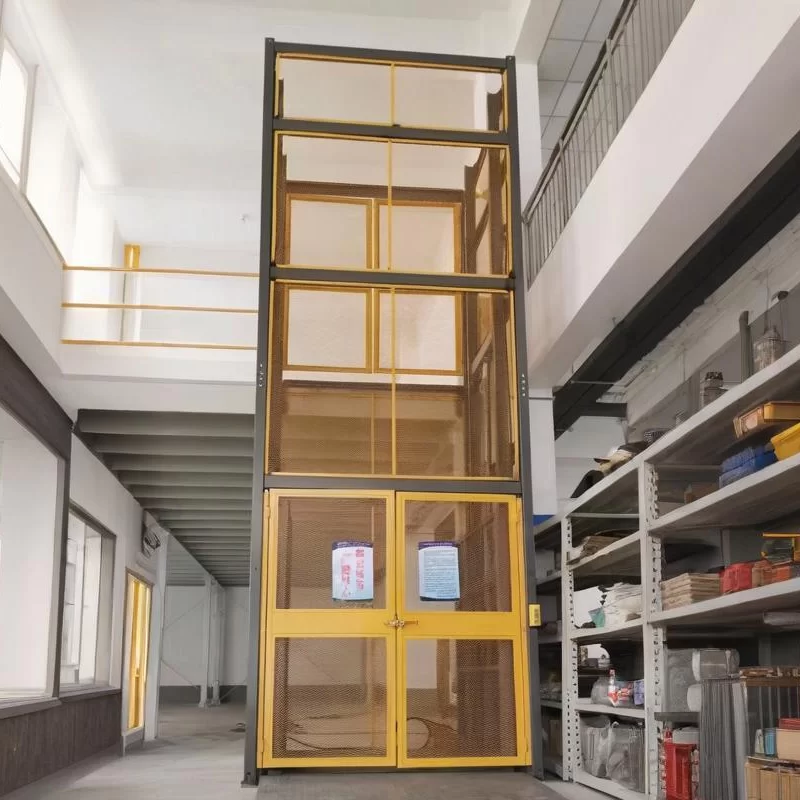
The mechanical structure includes the base frame, lifting carriage (platform), guide rail system, and safety components such as doors and guardrails.
Base Frame: A heavy-duty steel frame that supports the entire system, designed for ground mounting without the need for a deep pit.
Lifting Carriage: The platform adopts an elevator-style enclosed box structure with a non-slip floor surface, enhancing load stability and safety during operation.
Guide Rail System: Precision-machined guide rails are installed on both sides of the lift, ensuring vertical travel accuracy. Each corner of the carriage is equipped with multiple guide wheels that run along the rails, providing smooth and stable movement.
2. Hydraulic System
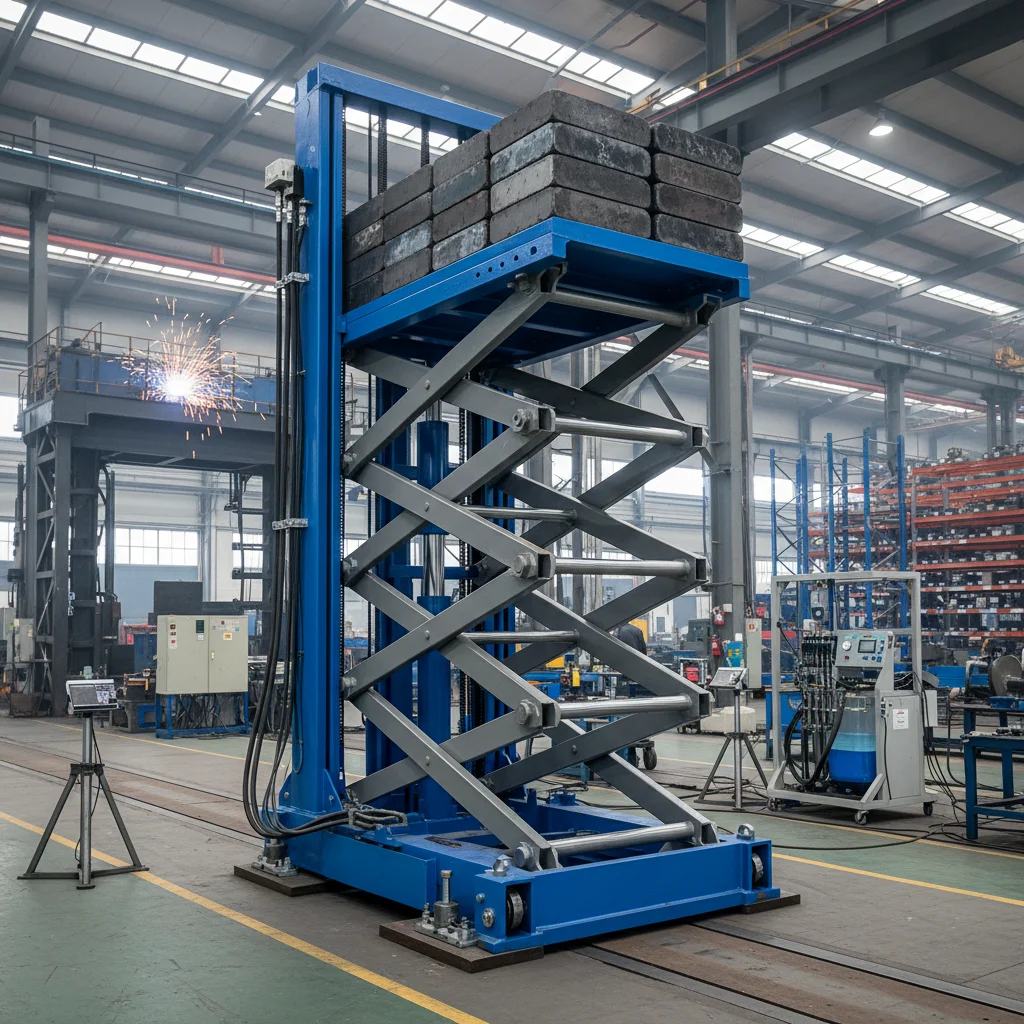
The hydraulic system consists of a pump station (including power unit, control valves, auxiliary components, and hydraulic oil) and hydraulic cylinders (actuators).
The motor drives the pump to pressurize hydraulic oil, which is directed through solenoid valves and pipes to extend the cylinders, thereby raising the platform.
A built-in hydraulic burst valve automatically locks the cylinder in the event of hose failure, preventing uncontrolled descent.
An emergency manual lowering valve allows safe descent during power outages or system malfunctions.
3. Electrical System
The electrical system manages motor startup and solenoid valve control for precise up/down movement.
All control circuits (excluding the main power supply) operate at a safe voltage below 36V, ensuring operator safety.
Limit switches at the upper and lower travel stops automatically cut power when the platform reaches the designated floors, preventing over-travel.
Optional interlocking door switches ensure that the lift operates only when all floor doors are securely closed.
Guide Rail Hydraulic Cargo Lift Key Features and Performance Advantages
Load Capacity: Typically ranges from 300 kg to 5,000 kg, with custom capacities available for specific applications.
No Overhead Machine Room Required: The hydraulic power unit is installed at ground level or in a small adjacent space, eliminating the need for a top-floor machine room and reducing construction costs.
Minimal Pit Requirement: With a starting height as low as 50–100 mm, the lift can be installed with a shallow pit or even directly on the finished floor, making it ideal for retrofit projects and buildings with limited below-ground space.
Robust Guidance System: The platform features a stable box-type carriage with multiple guide wheels running along rigid guide rails. This multi-point guidance system ensures balanced load distribution, prevents uneven stress on the hydraulic cylinder, and significantly extends the service life of the equipment.
Cylinder Protection: The top of the hydraulic cylinder is equipped with a secondary guide mechanism, ensuring stable vertical extension and reducing wear on the cylinder seal.
Safety Features:
Hydraulic burst valve for overload and hose rupture protection
Emergency manual lowering valve
Floor door interlock switches (optional)
Overload protection to prevent lifting beyond rated capacity
Upper and lower limit switches
Easy Operation: Push-button controls are available on each floor and optionally on the platform itself. Operation is intuitive, requiring no specialized training.
Low Maintenance: The modular design of the hydraulic system and the use of durable components simplify maintenance and reduce downtime.
Guide Rail Hydraulic Cargo Lift Application Scenarios
Multi-Story Factories: Transporting raw materials, work-in-progress, and finished goods between production floors.
Warehouses & Distribution Centers: Moving pallets and heavy goods between storage levels.
Restaurants & Hotels: Lifting food supplies, linens, and equipment between kitchens, storage areas, and service floors.
Retail & Shopping Malls: Transporting merchandise between stockrooms and sales floors.
Auto Repair Shops: Lifting engines, parts, and equipment between workshops and storage areas.
Residential Buildings: Providing accessibility for goods in buildings without passenger elevator space.
- Summary
The guide rail hydraulic cargo lift combines reliability, efficiency, and cost-effectiveness—making it the ideal solution for vertical material transport in modern industrial and commercial environments. Its compact footprint, minimal construction requirements, and robust safety features offer a practical alternative to traditional freight elevators, delivering exceptional value for a wide range of applications.
-
Request a Quote for Hydraulic Logistics Equipment
Tell us your requirements and get a fast, customized solution for lift tables, dock levelers, and other hydraulic logistics equipment.